
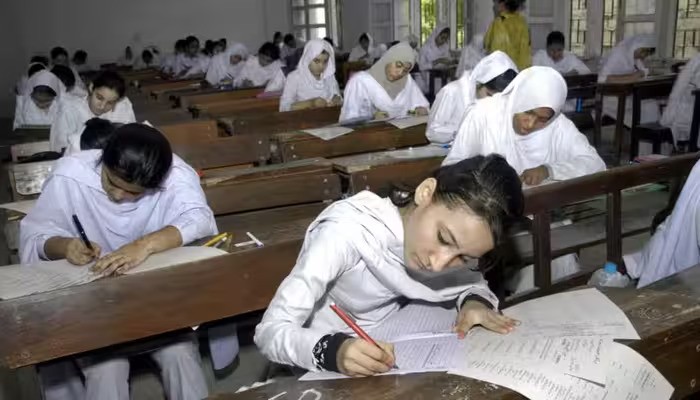
The BISE Rawalpindi 11th class result 2025 has been announced, reflecting a year of mixed outcomes for students across Punjab. With an overall pass percentage of 43.46%, the results highlight both academic excellence and challenges faced in various groups and subjects. Out of 62,020 students who appeared in the exams, only 26,951 managed to pass, showing a need for improved preparation and focus in several disciplines.
Low Overall Pass Percentage Raises Concerns
This year’s 11th class result paints a cautious picture for academic progress. While some students excelled, the overall pass rate fell below 50%, standing at just 43.46%. The results were officially announced on October 15, 2025, for examinations held between May 20 and June 13.
The jurisdiction of BISE Rawalpindi covers key regions, including Rawalpindi, Attock, Chakwal, Jhelum, Murree, and Talagang. Across these districts, the result indicates a clear divide between science and humanities groups, with technical and science-related streams showing stronger performance.
Group-Wise Performance Breakdown
When examined by study group, Pre-Engineering students secured the highest pass rate at 55.78%, showing consistent academic strength in technical subjects. Pre-Medical students followed closely with 52.51%, reflecting steady performance in biology and allied sciences.
On the other hand, Humanities recorded the lowest pass percentage of 36.14%, revealing difficulties faced by students in arts and social sciences. Commerce and General Science groups also performed moderately, achieving 40.84% and 44.63% respectively.
The unlisted Home Economics group did not have available pass data, but the overall trend shows that science and professional courses continue to lead in performance compared to general streams.
Read: TLP Chief Saad Rizvi Traced as Police Tighten Crackdown
Key Facts and Figures
The official data released by BISE Rawalpindi highlights the following:
Total students appeared: 62,020
Total passed: 26,951
Overall pass rate: 43.46%
Exam period: May 20 – June 13, 2025
Result date: October 15, 2025
These statistics underline a challenging academic session where less than half the candidates managed to pass their exams.
Subject-Wise Performance Shows Wide Variation
A closer look at the subject-wise pass percentage reveals an interesting contrast between disciplines. Islamic and language subjects dominated the top ranks, while core science and mathematics subjects posted moderate success rates.
Among the standout performances, Translation of the Holy Quran recorded an impressive 98.67% pass rate — the highest across all subjects. It was followed by Islamic Education (Compulsory) at 96.17% and Library Science at 94.83%.
Other subjects that showed strong results included Punjabi (93.04%), Fine Arts (93.33%), and Psychology (90.50%), suggesting that students in religious and linguistic studies performed exceptionally well.
In comparison, major academic subjects reflected mixed outcomes:
Biology: 72.49%
Chemistry: 70.90%
Physics: 71.80%
Mathematics: 66.38%
English: 70.18%
Computer Science: 74.71%
These figures suggest that while most science students maintained consistent results, mathematics remained a relatively weaker area compared to others.
Strong Show in Commerce and Technical Subjects
Commerce-related subjects also saw healthy performances, underscoring improved academic focus in business education. Principles of Commerce registered an 85.81% pass rate, while Principles of Accounting followed with 83.33%. Business Math led this category with a remarkable 86.67% success rate.
These results indicate that students pursuing commerce-related disciplines displayed solid preparation and conceptual understanding.
Humanities Struggle to Keep Up
The Humanities group showed the lowest overall performance. While subjects such as Education (80.16%), Sociology (91.37%), and Psychology (90.50%) stood out positively, others lagged behind. History of Pakistan recorded a lower 64.02%, and Economics managed a modest 77.41%.
This uneven performance suggests that while some social sciences performed well, traditional humanities subjects faced difficulty maintaining high pass rates.
Science Groups Maintain Steady Dominance
Despite a few dips, science streams once again demonstrated their dominance. Both Pre-Medical and Pre-Engineering students maintained over 50% pass rates — a notable achievement considering the overall average remained below that mark.
Subjects like Computer Science (74.71%) and Physics (71.80%) showed that students have adapted well to technology-integrated learning. Similarly, Chemistry (70.90%) and Biology (72.49%) continued to anchor strong performances in natural sciences.
Religious and Language Studies Outshine
Religious education subjects continued to lead the board results, showing exceptional consistency. Along with Translation of the Holy Quran (98.67%), Islamic Studies (Elective) recorded a strong 88.74%. These subjects remained top performers year after year, highlighting students’ deep engagement and understanding in religious studies.
Languages also delivered excellent outcomes, with Urdu (92.84%), Urdu Advance (84.02%), and Punjabi (93.04%) achieving high pass rates. These results reflect linguistic proficiency among students across regions under the Rawalpindi Board’s jurisdiction.
Regional Overview and Academic Trends
Across Rawalpindi, Attock, Chakwal, and Jhelum, the results show a mix of academic progress and challenges. Urban centers generally performed better, while rural areas showed relatively lower averages.
Murree and Talagang maintained steady results but reflected the broader provincial trend — science subjects thriving while humanities lagged behind.
The strong performances in religious and technical subjects point toward evolving academic interests among students, while the overall low pass rate calls for greater emphasis on conceptual clarity and exam readiness.
A Year of Lessons and Opportunities
The BISE Rawalpindi 11th class result 2025 offers both achievements to celebrate and lessons to learn. With Pre-Engineering topping group performance and humanities needing focused improvement, the data provides a clear roadmap for educators and policymakers.
As Rawalpindi Board prepares for the next academic session, the message is clear — consistent guidance, practical teaching methods, and early exam preparation can help turn these numbers around and ensure stronger results in the years ahead.
Follow us on Instagram, YouTube, Facebook,, X and TikTok for latest updates
