
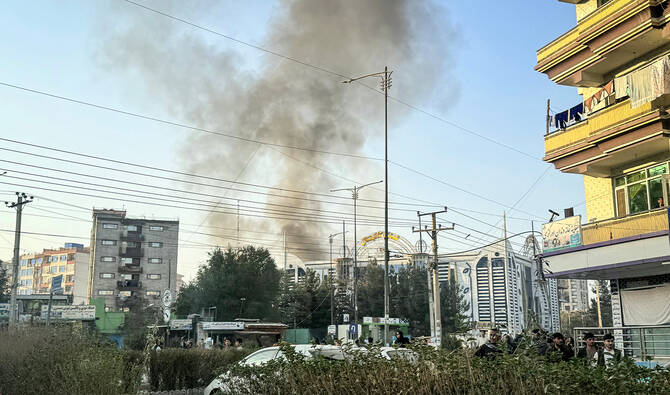
In a strong response to recent border clashes, Pakistan has defended its Afghanistan strikes, calling them a legitimate act of self-defense. The Foreign Office said Islamabad repelled unprovoked assaults from across the border and inflicted heavy losses on Taliban and allied militant groups. It also warned Kabul to take concrete action against the militants allegedly operating from Afghan soil.
Cross-Border Tensions Erupt
Heavy fighting erupted last week along the Pakistan-Afghanistan border, leaving dozens dead on both sides. The clashes began on Saturday and escalated rapidly, prompting Pakistan to launch targeted airstrikes in Afghanistan’s Kandahar and Kabul regions. A two-day truce later brought temporary calm, ending on Friday evening.
According to Pakistan, the recent violence stems from Afghanistan’s failure to prevent banned groups such as the Tehreek-e-Taliban Pakistan (TTP) and the Baloch Liberation Army (BLA) from using Afghan territory as a base for cross-border attacks. Kabul, however, denies harboring militants or facilitating assaults against Pakistan.
Islamabad’s Defense: ‘Right to Protect Our Territory’
Foreign Office spokesperson Shafqat Ali Khan said during his weekly briefing that Pakistan had acted only in response to aggression. “Pakistan, exercising its right of self-defense, effectively repulsed assaults all along the border and inflicted heavy losses on Taliban forces and affiliated terrorist groups,” he stated.
Khan added that the strikes were carried out with precision and restraint. “Our targeted and precise defensive response was not aimed at Afghan civilians. Unlike Taliban forces, we exercise extreme caution to avoid civilian casualties,” he emphasized.
Read: Strong Earthquake Jolts KP, Islamabad, and Northern Pakistan
Warning to Kabul Over Militant Presence
Pakistan has repeatedly accused the Taliban-led government of allowing militant groups to operate freely in Afghanistan. Khan reiterated this concern, warning that the continued presence of these groups poses a direct threat to Pakistan’s security.
“The fact that these militants enjoy freedom of activity in Afghanistan is well-documented and reflected in the United Nations Monitoring Team reports,” he said. “The fight against terrorism is a shared responsibility. Instead of shifting blame, the Taliban regime must fulfill its commitment to prevent its territory from being used for terrorism.”
The spokesperson urged Kabul to take “concrete and verifiable actions” against the TTP and BLA. He said Islamabad had shared detailed intelligence with Afghan authorities on several occasions, expecting cooperation in dismantling militant networks.
Heavy Losses and Retaliatory Strikes
According to Pakistan’s account, the latest border conflict saw significant losses among Taliban-linked fighters. The Foreign Office described Pakistan’s actions as “defensive but decisive,” noting that air and ground operations targeted militant positions responsible for firing across the border.
While Pakistan did not disclose specific casualty figures, officials claimed the operations successfully neutralized several key militant hideouts near the frontier.
Regional Impact and Security Concerns
The renewed hostilities have heightened regional tension, reviving fears of instability along one of the world’s most sensitive borders. Analysts warn that continued clashes could undermine fragile security in both countries and disrupt trade and transit routes critical for regional connectivity.
For years, Pakistan has argued that instability in Afghanistan spills across the border, fueling terrorism and extremism in its border provinces. Officials maintain that Islamabad has exercised “maximum restraint” despite repeated provocations.
Khan reaffirmed Pakistan’s preference for peace, saying the country still sought diplomatic engagement with Kabul. “We want regional stability. Pakistan believes dialogue is the best path forward to resolve issues,” he said.
Taliban’s Denial and Diplomatic Strain
Afghan officials, meanwhile, have denied Pakistan’s accusations, asserting that the clashes were triggered by Pakistani aggression. The Taliban government insists it is not sheltering the TTP or BLA and accuses Pakistan of violating Afghan sovereignty through airstrikes.
This growing mistrust has strained bilateral relations that were already fragile. Since the Taliban takeover of Kabul in 2021, Pakistan has sought to maintain cooperative ties but has repeatedly voiced frustration over cross-border attacks.
The Broader Context: Long-Standing Border Disputes
The Pakistan-Afghanistan border, often referred to as the Durand Line, remains a contentious issue. Afghanistan has historically refused to recognize it as an international boundary, leading to frequent skirmishes and diplomatic disputes.
These tensions have escalated in recent years, as Islamabad accuses Kabul of turning a blind eye to the TTP’s resurgence. Pakistan claims the group uses Afghan territory to launch attacks on its security forces, particularly in Khyber Pakhtunkhwa and Balochistan.
Islamabad’s Call for Regional Cooperation
Despite the latest clashes, Pakistan reiterated its commitment to counterterrorism cooperation at the regional level. The Foreign Office urged Afghanistan to join hands in eliminating militant threats that endanger both nations.
“The goal should be lasting peace and stability,” Khan said. “Terrorism threatens not just Pakistan or Afghanistan but the entire region. Both countries must work together to ensure their borders remain peaceful.”
He noted that Pakistan continues to monitor the situation closely and remains prepared to defend its territorial integrity. However, he emphasized that military measures are only a last resort.
Path Forward
Analysts believe Islamabad’s firm stance signals a shift toward a more assertive policy on border security. While Pakistan has long preferred dialogue, continued attacks from across the border have tested its patience.
Observers also suggest that the international community could play a role in easing tensions by encouraging Kabul to rein in militant activities and resume security coordination with Islamabad.
The Afghanistan strikes highlight Pakistan’s growing frustration with what it perceives as Afghanistan’s inaction against extremist sanctuaries. Whether both sides return to diplomacy or descend further into conflict will determine the stability of the region in the coming months.
Follow us on Instagram, YouTube, Facebook,, X and TikTok for latest updates
