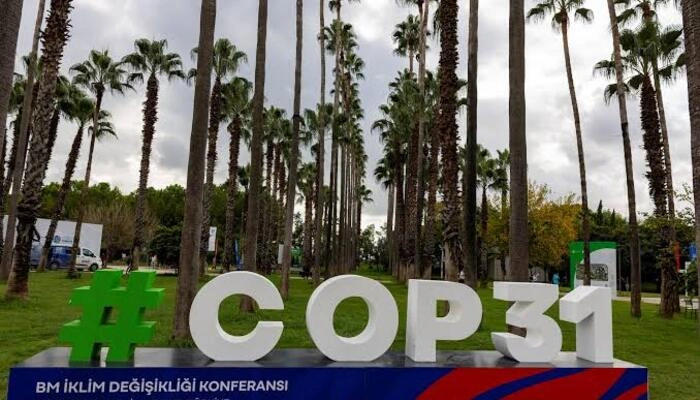
The COP31 climate deal failed to secure a major political agreement on stronger climate action, exposing deep divisions between countries despite mounting evidence of global warming. The summit, jointly hosted by Turkey and Australia, ended after some of the longest-running climate negotiations in United Nations history, with disagreements over fossil fuels and climate finance preventing nations from reaching a common position.
The talks took place against a backdrop of increasingly severe climate events. Glacier collapses, record-breaking European temperatures and wildfires across Asia highlighted the growing consequences of rising global temperatures in 2026.
However, the urgency of the climate crisis did not translate into political unity. The negotiations ended without the central agreement, known as the Antalya Pacts, which the hosts had hoped would accelerate international efforts to address climate change.
The outcome has raised fresh questions about the effectiveness of the annual UN climate conferences and their ability to deliver meaningful commitments.
Final-Day Disputes Derail Climate Negotiations
The final day of the summit witnessed heated disagreements as countries struggled to reach consensus on the proposed agreement.
Several nations walked out of the negotiations over the absence of explicit references to fossil fuels in the draft text and disagreements surrounding financial support for climate action.
Turkey and Australia had entered the summit with ambitions to bring countries together and make COP31 an implementation-focused conference. Their joint hosting arrangement was intended to strengthen international cooperation and turn existing climate commitments into practical action.
However, geopolitical divisions and competing national interests complicated the negotiations.
The failure to secure a comprehensive agreement also weakened hopes of presenting the summit as a turning point in global climate cooperation.
World Faces Growing Risks Beyond the 1.5C Target
One of the most significant issues surrounding the negotiations was the growing likelihood that global temperatures would exceed the 1.5C threshold established under the 2015 Paris Climate Agreement.
The United Nations had warned that the world was expected to surpass this critical temperature limit, raising concerns about the long-term consequences for people, ecosystems and economies.
The 1.5C threshold represents an important international target designed to limit the most dangerous effects of global warming.
Scientific assessments have repeatedly highlighted the difference between limiting temperature increases to 1.5C and allowing them to reach 2C above pre-industrial levels.
A world experiencing 2C of warming could face approximately 10 centimetres of additional sea-level rise compared with a 1.5C scenario. This increase could expose around 10 million additional people to coastal flooding.
Higher temperatures would also increase ocean acidification, threatening marine ecosystems and potentially causing irreversible damage to certain forms of marine life.
Extreme heat would become a serious concern across every inhabited region, affecting public health, agriculture, water supplies and economic activities.
Climate change is increasing the risks associated with extreme temperatures, rising seas and environmental damage.
Countries Lose Agreement on Limiting Global Warming
Despite the disagreements, several countries continued to describe the 1.5C target as a central priority for international climate action.
UK Energy Secretary Miatta Fahnbulleh acknowledged the difficult circumstances surrounding the negotiations and stressed the need for stronger efforts to reduce greenhouse gas emissions.
“This COP sought to confront hard truths – that global warming is set to overshoot 1.5C and that we must act with even more urgency to reduce emissions,” she said at the conclusion of the talks.
An earlier draft agreement had recognised the possibility of temperatures exceeding the internationally agreed threshold. It also called for any overshoot to remain as limited and short-lived as possible.
However, the failure to reach consensus meant this recognition did not become part of the final political agreement.
The absence of an agreed position highlighted the growing challenge of balancing climate ambitions with the economic and political priorities of individual countries.
Carbon Removal Emerges as Another Climate Solution
Another important proposal in the draft agreement concerned carbon dioxide removal (CDR), a process designed to remove greenhouse gases from the atmosphere.
The approach involves using technologies and natural systems to capture and remove carbon dioxide, potentially helping reduce atmospheric concentrations of greenhouse gases.
Read more: Pakistan Take 227-Run Lead as Ghazi Ghori, Razaullah Rescue Batting Collapse
The proposal attracted attention because carbon removal had not previously received explicit recognition in a final COP agreement.
Supporters view the technology as a possible tool for addressing emissions that are difficult to eliminate. However, it cannot replace rapid reductions in greenhouse gas emissions.
Its inclusion in the draft reflected growing recognition that the world may need additional measures to address the consequences of climate change.
Questions Grow Over Future of COP Summits
The outcome of COP31 has renewed concerns about whether the UN climate negotiation process can deliver the level of cooperation required to address the global crisis.
Although countries continue to recognise the importance of climate action, disagreements over fossil fuels, financial responsibilities and national interests remain significant obstacles.
The summit’s failure to produce its central agreement also highlights the gap between scientific warnings and political decision-making.
With global temperatures continuing to rise and extreme weather events threatening communities worldwide, pressure is growing on governments to turn climate promises into measurable action.
The challenge for future climate conferences will be to rebuild trust, resolve disagreements and establish practical commitments that countries are willing to implement.
-
-

-

-