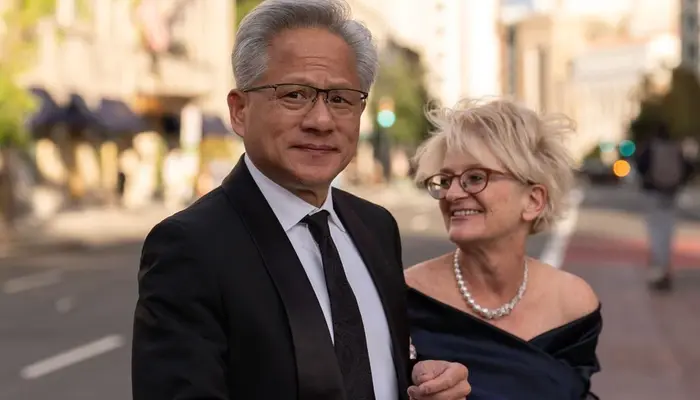
Nvidia co-founder Jensen Huang has resigned as chief executive officer, president and board member of the artificial intelligence chipmaker following revelations about two alleged extramarital affairs, including one involving a woman suspected by US intelligence agencies of spying for China.
The 63-year-old’s departure, announced on Thursday, November 12, brings an end to his 33-year leadership of the company he established in 1993. Nvidia confirmed that Chief Financial Officer Colette Kress would take over as interim CEO while its board searches for a permanent replacement.
Huang’s resignation marks a major leadership change at one of the world’s most influential technology companies, whose processors have become essential to the global artificial intelligence industry.
Nvidia did not provide a specific reason for his departure in its announcement. However, the decision came amid growing controversy surrounding reports of Huang’s personal relationships and a separate investigation into possible foreign intelligence activity.

Colette Kress Takes Over as Interim Nvidia CEO
Colette Kress, who joined Nvidia in 2013, will lead the company while the board considers both internal and external candidates for the permanent CEO position.


Kress has played a central role in managing Nvidia’s finances during its rapid expansion into the artificial intelligence market. Her appointment is intended to maintain business continuity as the company navigates the leadership transition.
The board also appointed former Synopsys chief executive Harvey C. Jones as its first-ever chairman. Jones has served on Nvidia’s board since the company was founded.
Huang, meanwhile, remains a significant shareholder, holding approximately 3.6% of Nvidia’s outstanding shares, according to reports.
Alleged Affairs Trigger Corporate and Security Concerns
The controversy intensified after reports emerged about Huang’s relationship with Alice Huang, a former senior executive at Singapore-based data centre company Megaspeed International.
US intelligence agencies reportedly suspected Alice Huang of working for China’s Ministry of State Security and passing information to Beijing. China has rejected the allegations, describing claims of an intelligence operation against Huang as unsubstantiated.
Huang acknowledged being unfaithful to his wife in a message to Nvidia employees, apologising to his family and colleagues for his actions. However, neither Huang nor Nvidia publicly identified the woman involved in that relationship in the apology.
Further pressure emerged after reports of another alleged relationship involving a senior Nvidia executive who reportedly worked under Huang. The additional allegations intensified scrutiny of his position and raised questions about corporate leadership and workplace conduct.
Nvidia’s board had already announced an independent investigation on November 8 into reports that Huang had been targeted in a foreign intelligence operation.
Read more: Jensen Huang Faces Questions in Taiwan as Report of Possible Chinese Spy Link Sparks Shock
At the time, the company said it had no reason to believe that national security or Nvidia’s confidential information had been compromised. The investigation was assigned to independent directors working with outside legal counsel.
Nvidia Shares Fall Amid Leadership Crisis
Huang’s departure triggered an immediate reaction in financial markets, with Nvidia shares falling as much as 13% in early Wall Street trading on Thursday.
The stock later recovered some losses but finished the session down approximately 4.3%. The company’s market value also faced substantial pressure during a turbulent week for the technology giant.
The market reaction reflects investor concerns about leadership uncertainty at a company that has become central to the global AI industry.
Nvidia’s processors power many of the advanced artificial intelligence systems developed by technology companies worldwide. Demand for its graphics processing units increased significantly following the launch of OpenAI’s ChatGPT in 2022, helping Nvidia become one of the world’s most valuable companies.
Huang’s departure therefore represents more than a change in executive leadership. It raises questions about the company’s ability to maintain its growth strategy and technological dominance under a new chief executive.
Trump Recommends Tim Cook as Huang’s Successor
US President Donald Trump also weighed in on the leadership change, publicly recommending former Apple chief executive Tim Cook as a potential replacement for Huang.
In a post on Truth Social, Trump wrote that there was only one person who could take Huang’s place, referring to Cook. He described the potential transition as a case of one legend replacing another.
Trump also praised Huang’s contribution to Nvidia, saying the departing chief executive had done a fantastic job.
However, Nvidia’s board has not announced a permanent successor and says it will consider candidates from both inside and outside the company.
Huang’s exit closes a 33-year chapter in Nvidia’s history and creates a significant leadership challenge for the company. The coming months will test whether its management team can maintain investor confidence and sustain its position at the forefront of the artificial intelligence industry.