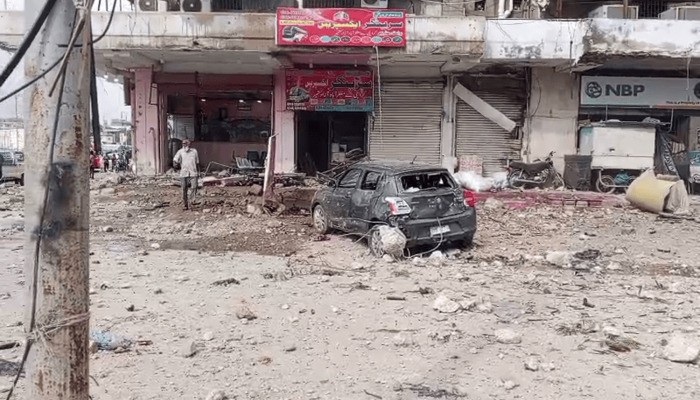
The Karachi warehouse explosion has once again exposed the dangers of storing hazardous material in residential areas. At least two people lost their lives and 33 sustained injuries when a massive blast triggered a blaze inside a warehouse near Taj Medical Complex. Officials confirmed that highly inflammable material was present at the site, making firefighting operations extremely difficult.
Tragic Loss of Life
Police surgeon Dr. Summaiya Syed reported that 20 injured people were shifted to Jinnah Postgraduate Medical Centre. Two of them were in critical condition. Another 14 were taken to Civil Hospital Karachi, with two in serious condition.
Later, authorities recovered the body of a 16-year-old from the upper floor of the building. A critically injured patient also succumbed to his injuries during treatment. Rescue teams confirmed that multiple families were trapped in the building before evacuations began.
Read: KP Government Unveils Major Compensation Package
Initial Investigations Point to Fireworks
Rescue 1122 spokesperson Hassaanul Haseeb Khan explained that the warehouse stored raw material for firecrackers. A suspected short circuit triggered the fire, which then caused a powerful explosion due to the presence of highly combustible substances.
The three-storey building had families living on the upper floors while the basement served as the storage facility. The blast damaged the structure, with pillars and walls collapsing. Concrete blocks fell on parked vehicles, while windows of nearby houses shattered.
Firefighting Challenges
Khan said that 12 fire tenders from KMC Fire Brigade and Rescue 1122 were dispatched. The fire reignited several times due to explosive material. Dense smoke made entry into the basement extremely difficult.
By evening, officials reported that the fire was 70 percent under control. Rescue teams continued cooling operations to prevent further flare-ups.
Counter-Terrorism Department’s Findings
Counter-Terrorism Department (CTD) senior official Raja Umer Khattab contradicted initial claims about the material. He stated that the warehouse contained explosive substances, not just firecracker ingredients.
He recalled that CTD had previously seized two tons of explosive material from the same area. Khattab stressed that even firecracker raw material could be used to manufacture bombs, making its presence in residential areas extremely dangerous.
According to him, laws allow only up to 50 kilograms of such material in shops, provided safety protocols are followed. In this case, investigators believe more than 50 kilograms were stored illegally.
Dangers of Storing Explosives in Cities
Khattab warned that people often underestimate the risks of firecrackers. He termed the illegal storage in a residential building a grave threat to both human lives and property.
He highlighted that while licensed production of fireworks is permitted in Punjab and Khyber Pakhtunkhwa, Sindh does not have any official firecracker manufacturing industry. This suggested the warehouse was operating outside legal boundaries.
Traffic Disruptions in Karachi
Following the explosion, Karachi Traffic Police shut down MA Jinnah Road. Vehicles from Numaish were diverted towards Society Signal and Ali Raza Imambargah. Authorities urged citizens to use alternate routes to avoid congestion.
Sindh Government’s Response
Sindh Chief Minister Murad Ali Shah immediately took notice of the incident. He ordered authorities to extinguish the fire quickly and ensure medical help for the injured.
The CM directed the Karachi commissioner to submit a detailed report once the blaze was controlled. He also stressed that no facility producing or storing hazardous material should operate near populated areas.
Sindh Home Minister Ziaul Hassan Lanjar also intervened. He instructed police reinforcements to secure the area and assist in rescuing victims. He demanded a thorough investigation, including witness statements and verification of whether the warehouse had a valid license.
Recurring Fire Hazards in Karachi
The incident is the latest in a series of urban fire disasters in Karachi. Weak safety enforcement, poor infrastructure, and negligence often contribute to these tragedies. Many buildings lack fire exits, alarms, or emergency protocols. Overloaded wiring and faulty power systems further increase the risk.
Earlier this month, a fire at the Karachi Export Processing Zone injured eight people and damaged three factories. In June, a blaze at Millennium Mall destroyed hundreds of shops after an electrical short circuit. Both incidents caused massive financial losses and exposed gaps in fire safety compliance.
Calls for Stricter Regulations
Public safety experts stressed that Karachi cannot afford repeated disasters. They called for stronger enforcement of building safety codes and stricter checks on facilities storing inflammable goods.
The Karachi warehouse explosion has now reignited debate on whether city authorities are doing enough to prevent such incidents. Residents and civil society groups demanded accountability for those who allowed the warehouse to operate in a densely populated are
Follow us on Instagram, YouTube, Facebook,, X and TikTok for latest updates