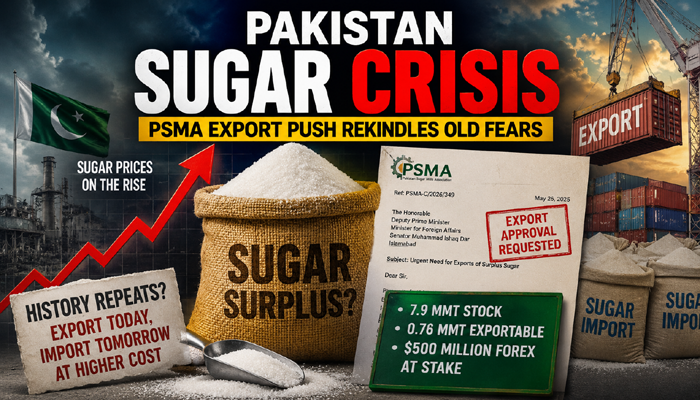
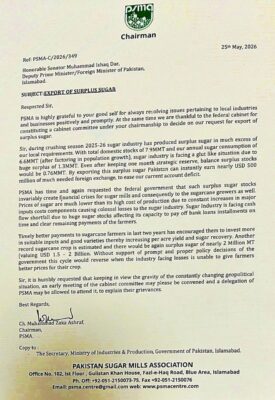
The Pakistan Sugar Crisis is back in the headlines, and once again the sugar industry is pushing a familiar and controversial argument. The Pakistan Sugar Mills Association has written to Deputy Prime Minister and Foreign Minister Ishaq Dar, claiming that the country has a large surplus of sugar and should be allowed to export it immediately.
On paper, the numbers sound impressive. The association says total stocks have climbed to 7.9 million metric tons, while annual domestic consumption stands near 6.6 million metric tons. It argues that after keeping aside one month of strategic reserve, about 0.76 million metric tons can be exported right away. The group says this could bring in nearly 500 million dollars in foreign exchange and help ease pressure on the current account.
But for ordinary consumers, the message sounds painfully familiar.
Read More: Sugar Sector Crisis: Growers Face Exploitation Amid Mismanagement
Why This Letter Has Triggered Alarm
Critics say this is not a fresh policy debate. It is the same old sugar cycle that has repeatedly hurt Pakistani households. First, mills create pressure for export permission by calling sugar stocks surplus. Then, once the local market tightens, prices rise sharply. After that, the same system often ends with expensive imports to fill the gap.
That pattern has made sugar one of the most politically sensitive commodities in Pakistan. Every time exports are approved too quickly, the domestic market seems to pay the price.
The letter also warns that mills may struggle to repay bank loans and clear payments to farmers if exports are delayed. It claims that current prices are already below production costs and that next year’s crop may be even larger. These arguments are designed to create urgency. But urgency has also been the opening line of every major sugar controversy in recent years.
The Real Fear Is Not Surplus. It Is Manipulation
This is where the Pakistan Sugar Crisis becomes more than an industry issue. It becomes a public trust issue.
The central concern is simple. If sugar is exported too soon, local supply may shrink. If supply shrinks, prices can jump. If prices jump, the same industry may later push for imports, often at higher international rates. In that case, the mills benefit twice. They earn from exports and then benefit again when imports are approved to control shortages.
Consumers, meanwhile, face the worst outcome. They pay more at home, while the market is told to accept the shock as unavoidable.
That is why many observers see the latest letter not as a solution, but as a repeat of a well-worn business strategy.
Why History Makes This Case Hard to Trust
Pakistan’s sugar history is full of sharp price swings, export incentives, shortages, and emergency imports. In previous cycles, the market has seen the same drama play out again and again. Sugar is shipped out when the industry says there is surplus. Then panic sets in, the local market tightens, and the government is forced to import sugar at a much higher cost.
This pattern has damaged public confidence. It has also raised serious questions about whether sugar stocks are being managed for national stability or for private profit.
For a country already struggling with inflation, expensive food items, and declining purchasing power, even a small disruption in sugar supply can hit millions of families hard.
What The Government Must Do Now
The government should not rush into export approval based only on industry pressure. It must verify stocks independently, review local consumption carefully, and protect domestic availability before any export decision is made.
A transparent stock audit is essential. So is a strict pricing watch. The public needs assurance that any surplus claim is real, not a commercial tactic dressed up as a national economic favor.
If the government gives in too quickly, the Pakistan Sugar Crisis may soon turn into another shortage story. And when that happens, the same people who pushed for exports today may be back tomorrow asking for import permission.
The public has seen this script before. What it needs now is not another sugar deal. It needs accountability.
For more Details and Previous Years Pakistan Sugar Crisis story covered by Dawn