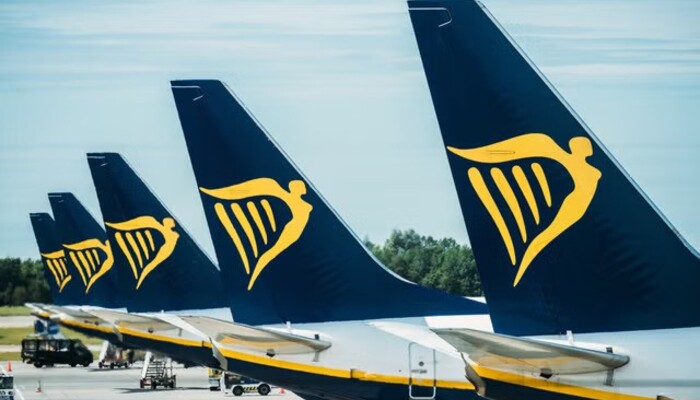
French air traffic control strike is set to disrupt travel plans across Europe, with Ryanair warning that 100,000 passengers could see their flights cancelled next week. The airline expects to ground around 600 flights in just the first two days of industrial action, dealing a major blow to travelers and airlines alike.
Strike to Begin on October 7
The French air traffic control union SNCTA announced plans to strike from October 7 to October 10. As the largest controllers’ union in France, its action is expected to cause widespread disruption across the continent. Ryanair’s CEO, Michael O’Leary, said cancellations will begin on Wednesday and Thursday, with the UK routes facing the brunt of the impact due to proximity to French airspace.
Ryanair’s Warning
Speaking to media, O’Leary described the expected cancellations as “needless.” He estimated that the strike would cost Ryanair around £20 million in lost revenue and disruption. He stressed that passengers who had no intention of traveling to France, such as those flying between London and Rome or Brussels and Madrid, would still see their journeys cancelled due to French overflight restrictions.
Union’s Demands
SNCTA has listed grievances that fueled its decision to strike. The union accused French air traffic authorities of creating an environment of mistrust, applying punitive measures, and enforcing what it described as “brutal managerial methods.” It also called for the restoration of pay that it says has eroded under inflation.
Read: Gillette Pakistan to Exit as Board Approves Delisting from PSX
Wider Impact on European Airlines
While Ryanair expects the largest cancellations, the strike will affect other carriers as well. EasyJet’s CEO, Kenton Jarvis, echoed O’Leary’s concerns. He warned that passengers and crew had been subjected to repeated air traffic control disruptions in recent years. Jarvis called for immediate action from French aviation authorities to improve resilience in the system.
He urged regulators to protect overflying rights during national strikes to prevent unnecessary disruption to flights that do not land or take off in France. “The rest of Europe should not be held hostage when French air traffic controllers strike,” Jarvis said.
Calls for European Intervention
O’Leary sharply criticized European Commission President Ursula von der Leyen, nicknaming her “President von Derlayed-Again.” He accused her of failing to protect overflights during national strikes and demanded that she step aside if unable to address the crisis.
He argued that protecting overflights was crucial for passengers whose journeys passed through French skies but had no direct connection to the country. Without such protections, he said, millions of passengers across Europe would remain vulnerable to disruptions from strikes limited to one nation.
Appeals to Passengers
In response to the looming strike, Ryanair has urged passengers to file complaints with transport ministers and the European Commission. The airline insists that pressure from travelers could push regulators to adopt policies shielding overflights from national disputes.
O’Leary said, “Passengers flying across Europe should not have to live in constant uncertainty, fearing their plans could be ruined every time French controllers stage industrial action.”
Government’s Position
The UK Department for Transport acknowledged the concerns but emphasized that airspace management remains under the sovereignty of each nation. A spokesperson said it was for individual states, including France, to decide how best to address such disputes and manage their skies.
Growing Pressure on French Authorities
With multiple airline leaders demanding solutions, the French aviation authority faces mounting pressure to act. Industry voices stress the need for reforms that build resilience into air traffic management and limit the fallout of labor disputes on passengers across the continent.
Airlines argue that failing to address these issues threatens not only passenger convenience but also the credibility of Europe’s aviation system. A coordinated approach at the European level, they say, could strike a balance between workers’ rights and the need to protect passengers from repeated large-scale disruptions.
The Stakes for Travelers
For now, passengers planning to travel in early October must brace for cancellations, delays, and uncertainty. Routes connecting the UK, Spain, Italy, and Greece will be among the most affected, with ripple effects expected across Europe.
The French air traffic control strike highlights a persistent challenge in European aviation: the vulnerability of millions of travelers to national disputes that quickly spread across borders. Unless effective policies are adopted, the cycle of strikes, cancellations, and passenger frustration will likely continue.
Follow us on Instagram, YouTube, Facebook,, X and TikTok for latest updates