

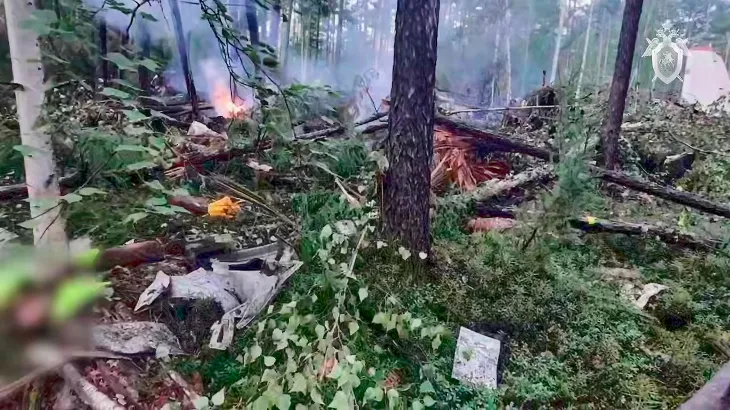
A devastating crash involving a Soviet-era aircraft has left all 48 people on board dead in Russia’s Far East. The Antonov An-24, built in 1976, went down in a dense forest as it attempted to land near the remote town of Tynda on Thursday. The tragedy has raised new concerns over Russia’s continued use of aging Soviet-era planes in its domestic aviation network.
Crash During Second Landing Attempt
The aircraft, operated by the regional carrier Angara Airlines, had taken off from Blagoveshchensk, a city near Russia’s border with China. It was en route to Tynda in the Amur region, an important railway hub. The plane carried 42 passengers, including five children, along with six crew members.
According to Russia’s Far Eastern Transport Prosecutor’s Office, the aircraft initially failed to land on its first approach. While attempting a second landing, it lost contact with air traffic control and disappeared from radar.
Search and Discovery
A search helicopter was quickly dispatched. Hours later, rescuers located the burning wreckage deep within a forested area. There were no survivors. Federal investigators and the regional governor confirmed that everyone on board had perished.
The charred fuselage was found broken apart, with no visible signs of survivors. Emergency teams combed through the debris for hours, but the outcome was tragically clear.
Read: UN Warns of Abuses Against Afghan Returnees Under Taliban
Investigation and Response
In response to the incident, Russian authorities have launched a full investigation. A criminal case has been opened to determine whether violations of air transport rules or negligence led to the crash. Prosecutors will examine flight records, maintenance logs, and pilot history.
Russian President Vladimir Putin expressed his condolences to the victims’ families and ordered support for the investigation.
Officials revealed that the aircraft had recently passed a technical inspection. However, records show the plane had experienced at least four minor incidents since 2018. Investigators will assess whether those past events indicated deeper mechanical or structural flaws.
Aircraft Age Under Scrutiny
The Antonov An-24, introduced in the 1960s, remains in service in several Russian regions. Thursday’s crash has renewed debate about the safety of operating aircraft that are nearly 50 years old. Aviation experts have long warned about the risks of relying on outdated models in challenging weather and terrain.
While Angara Airlines maintained that the plane was airworthy, critics argue that continued dependence on older fleets reflects broader infrastructure and funding issues within Russia’s regional aviation sector.
Route and Operator
The route from Blagoveshchensk to Tynda connects two remote parts of the Amur region. With limited access by road, air travel remains a crucial means of transportation. Angara Airlines, a privately owned regional carrier, operates numerous flights across Siberia and the Russian Far East. It is one of several airlines still using Soviet-designed aircraft due to cost and availability factors.
The crash, however, could now prompt a reassessment of those practices.
Reactions Across Russia
News of the tragedy quickly spread across the country. Families gathered at both airports, awaiting information and grieving the loss of loved ones. Emergency support teams, including grief counselors, were dispatched to assist those affected.
Russian aviation regulators, already under pressure following previous incidents, are expected to face intense scrutiny in the coming weeks. Lawmakers have called for a review of aircraft certifications and better funding for regional airlines to modernize their fleets.
A Reminder of Aviation Risks
While Russia has made strides in improving air safety over the past two decades, Thursday’s crash serves as a grim reminder of lingering challenges—especially in remote and rugged areas where newer aircraft are scarce and maintenance is difficult.
This latest tragedy has once again placed Russia’s aging aviation fleet at the center of public debate, highlighting the urgent need for reform and investment in safer skies.