
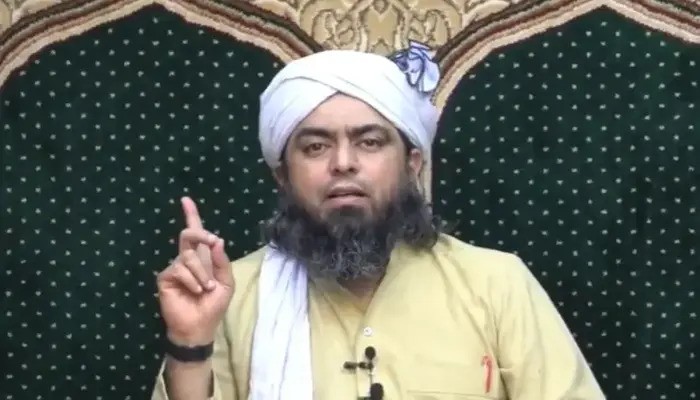
The detention of Engineer Muhammad Ali Mirza has sparked debate across Pakistan after Jhelum police announced his arrest under the Maintenance of Public Order (MPO) ordinance. Authorities stated the cleric would remain in custody for 30 days following allegations of controversial remarks made during a recent interview that circulated on social media.
Arrest Confirmed by Authorities
On Tuesday, Jhelum Deputy Commissioner Muhammad Meesam Abbas and District Police Officer Ahmed Mohiyuddin confirmed Mirza’s detention under Section 3 of the MPO ordinance. This section empowers the government to detain any person suspected of actions deemed harmful to public safety or prejudicial to public order.
Officials maintained that the arrest was necessary to prevent unrest. They emphasized that his remarks, now widely shared online, risked fueling tensions among different religious groups.
Background of the Detained Cleric
Engineer Muhammad Ali Mirza, a resident of Machine Mohallah in Jhelum, has gained national prominence through his online presence. He regularly uploads religious lectures and discussions on his social media platforms. His YouTube channel alone has gathered more than 3.1 million followers, making him one of Pakistan’s most widely followed clerics in the digital space.
Mirza presents himself as a reformist scholar. His commentaries often spark heated debate, attracting both strong support and sharp criticism. This wide influence has made him a polarizing figure within Pakistan’s religious landscape.
Read: Wrestler Syko Stu Fights for Life After Raja Jackson’s Attack
Complaint by Religious Group
A day before his arrest, a religious group filed an application requesting legal action against Mirza. The application, reviewed by officials, accused him of delivering remarks in an interview that the complainants described as “controversial and offensive.” The content of the remarks, which quickly went viral, triggered calls for government action to maintain harmony.
Police confirmed that this complaint played a central role in prompting the decision to invoke the MPO against him.
Previous Bans and Restrictions
This is not the first time Mirza has faced restrictions from the authorities. In Muharram last year, the then-Jhelum Deputy Commissioner had banned the speeches of 17 clerics, including Mirza, to prevent potential sectarian tensions. Officials argued that these preventive measures were necessary to protect public peace during sensitive religious gatherings.
Mirza has also been booked in earlier cases. In May 2020, Jhelum police arrested him for allegedly making derogatory remarks against certain religious figures. He was later granted bail and released, but the case added to his controversial profile.
Survival of an Assassination Attempt
Mirza’s outspoken views have also placed his life in danger. In March 2021, he survived an assassination attempt at a religious academy. The attacker was swiftly arrested, and police registered a case of attempted murder. The incident highlighted the risks faced by clerics who publicly challenge dominant religious narratives or engage in contentious debates.
Despite the attempt on his life, Mirza continued to speak out on sensitive issues, further increasing both his support base and opposition.
Public Order and the MPO Ordinance
The Maintenance of Public Order ordinance has often been used in Pakistan to curb activities that authorities fear may incite violence or create unrest. Section 3, the clause applied in Mirza’s case, allows preventive detention for individuals suspected of threatening peace.
Critics argue that the MPO can be misused to silence dissenting voices. Supporters, however, maintain it is a necessary legal instrument to ensure communal harmony in a country with a history of sectarian tensions.
In Mirza’s case, officials insist that the move is preventive, not punitive. They argue that the cleric’s remarks, combined with his large digital following, created an environment where unrest could easily erupt if immediate action had not been taken.
Digital Influence and Rising Tensions
The arrest once again draws attention to the growing influence of digital platforms in shaping religious and political discourse in Pakistan. With millions of followers, Mirza’s online lectures reach audiences across the country and abroad. His critics accuse him of using this reach irresponsibly, while his supporters argue that he promotes independent thought in religious interpretation.
Authorities now face the challenge of balancing freedom of expression with the need to prevent violence. The spread of his interview across social media demonstrates how quickly content can gain traction and influence public sentiment.
A Pattern of Controversy
The cleric’s career has followed a repeated cycle of bold statements, public backlash, and official action. Each controversy has only increased his visibility. While many accuse him of creating division, others credit him with opening debates long considered taboo.
This pattern places Mirza in a unique position. He is both a critic of traditional religious establishments and a symbol of the tensions within Pakistan’s evolving religious discourse
Follow us on Instagram, YouTube, Facebook,, X and TikTok for latest updates
