
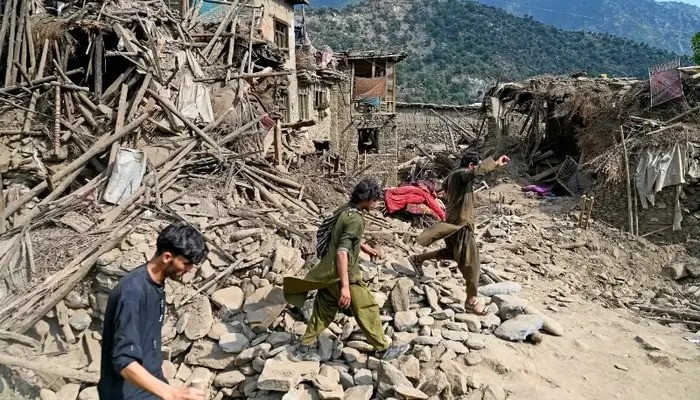
The Afghanistan earthquake has left the nation reeling, with the death toll surpassing 1,400 and thousands more injured. Entire villages in the mountainous east have been reduced to rubble, while rescue workers struggle to reach remote areas cut off by damaged roads and landslides. Authorities warn that the toll may continue to rise as bodies remain trapped under debris.
Scale of Devastation
Officials confirmed at least 1,411 deaths and more than 3,124 injuries. Over 5,400 houses have been destroyed, leaving families homeless and exposed to harsh conditions. Villagers mourned loved ones by burying them in white shrouds after hurried prayers. Many continue to dig through the rubble with their bare hands in desperate attempts to find survivors.
The Afghan Red Crescent Society warned that many more people may still be trapped. The United Nations said the true scale of the tragedy was yet to unfold, with the numbers expected to climb.
Epicenter and Impact
The earthquake struck just after midnight on Sunday, measuring 6.0 on the Richter scale. Its shallow depth of 10 kilometers made it particularly destructive. The eastern provinces of Kunar and Nangarhar suffered the heaviest losses, with mud and stone homes collapsing instantly.
Rescue operations began in four villages of Kunar on Monday and later expanded to remote valleys. But authorities admitted that access remained the greatest challenge. Blocked mountain roads and continued aftershocks slowed the delivery of aid.
Rescue Struggles
Ehsanullah Ehsan, the provincial disaster management chief, said the situation remained dire. “We cannot predict how many people remain trapped, but we are trying to reach them quickly,” he said. Helicopters ferried the injured to hospitals, while ambulances queued along damaged roads.
Villagers joined rescue workers, clearing debris by hand as they searched for missing relatives. “I came looking for my friend,” said 26-year-old Obaidullah Stoman in Wadir village. “But there is only rubble left.”
Hospitals Under Strain
Field hospitals were set up to treat the injured. Some patients were transferred to larger hospitals in Kabul and Nangarhar, but the fragile health system was already overwhelmed. The World Health Organization said over 12,000 people had been affected and warned of contamination risks from damaged water supplies and animal carcasses.
Unicef said thousands of children were at risk. The agency sent medical kits, tents, warm clothing, and hygiene supplies to the affected areas.
Read: Belgium to Recognise Palestinian State, Impose Sanctions on Israel
Taliban Response
Taliban soldiers joined rescue operations, securing areas and helping distribute aid. Officials said machinery was being moved in to clear blocked roads. At the same time, they appealed for more international support to cope with the disaster.
“Many people are living in the open, afraid of aftershocks,” said Safiullah Noorzai from Aseel, a humanitarian group. “They urgently need food, tents, and medical aid.”
International Aid Promises
The disaster struck a country already struggling with a humanitarian crisis after decades of war and reduced foreign aid. Since the Taliban takeover in 2021, most donors cut assistance. Earlier this year, the United States canceled most of its remaining aid after political shifts in Washington.
On Monday, UN Secretary-General Antonio Guterres announced $5 million in immediate assistance and pledged more support once needs were fully assessed.
Pakistan also extended help. President Asif Ali Zardari and Prime Minister Shehbaz Sharif expressed condolences, while the Khyber Pakhtunkhwa government dispatched essential medicines and offered medical staff. Adviser Barrister Mohammad Ali Saif said hospitals across the province were open to treat Afghan victims. Foreign Minister Ishaq Dar assured Kabul of Pakistan’s readiness to provide full assistance.
Britain allocated £1 million for healthcare and emergency supplies through the UN and Red Cross. India delivered 1,000 tents and sent 15 tonnes of food to Kunar, with more aid planned. China, the UAE, the EU, and Iran also pledged support, though much of it has yet to reach Afghanistan.
History of Deadly Quakes
Afghanistan sits on a major fault line where the Indian and Eurasian plates meet. This makes the country highly vulnerable to earthquakes.
In October 2023, a 6.3-magnitude quake killed more than 1,500 people in Herat province. In June 2022, a 5.9 quake struck Paktika, leaving over 1,000 dead and tens of thousands homeless.
The latest tragedy highlights Afghanistan’s vulnerability, made worse by poverty, conflict, and weak infrastructure. With homes built of mud and stone, entire communities collapse within seconds when powerful tremors strike.
A Nation in Mourning
As families bury their dead and survivors camp in the open, Afghanistan faces a race against time. The combination of blocked roads, ongoing aftershocks, and limited resources makes rescue efforts extremely difficult. Yet the resilience of local communities, supported by aid groups and international promises, keeps hope alive.
The earthquake has once again exposed the fragility of Afghanistan’s health system and the urgent need for stronger disaster preparedness. For now, grieving families wait for help, clinging to hope that more survivors will still be found under the rubble.
Follow us on Instagram, YouTube, Facebook,, X and TikTok for latest updates
