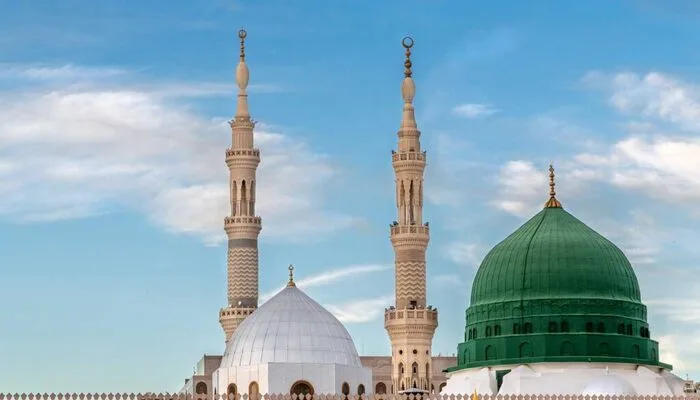
Madinah, officially Al-Madinah Al-Munawwarah, holds a place of unparalleled love and respect in the hearts of Muslims worldwide. It is the second holiest city in Islam after Makkah and the resting place of the beloved Prophet Muhammad (peace be upon him). Millions of pilgrims visit Madinah every year to pray in Al-Masjid an-Nabawi and to reflect on its sacred history. Beyond its widely known status, this radiant city has many remarkable and lesser-known aspects. Below are twenty interesting facts about Madinah, combining its spiritual significance, history and modern character.
The Spiritual Heart of Islam
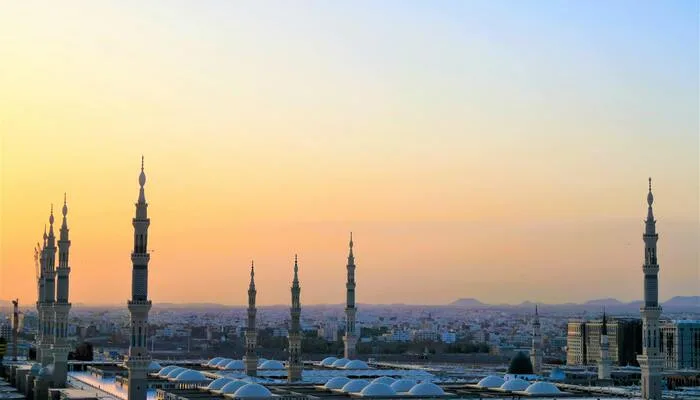
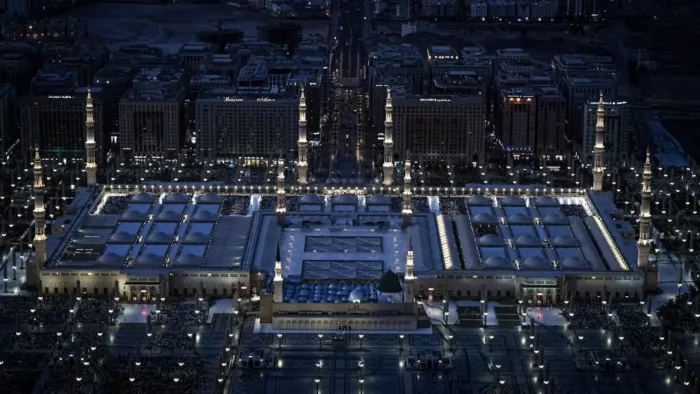
Madinah is home to Al-Masjid an-Nabawi, the Prophet’s Mosque. Built by Prophet Muhammad (peace be upon him) himself after his migration from Makkah in 622 CE, it now accommodates more than a million worshippers during peak seasons. The mosque’s serene atmosphere and immaculate cleanliness embody the reverence Muslims hold for this sacred space.
Read more: Israel Expands Gaza City Offensive Amid Rising Civilian Toll
Between the Prophet’s (peace be upon him) tomb and his pulpit lies the Rawdah al-Sharifah, also called Riadhul Jannah, the “Garden of Paradise.” According to authentic hadith, praying here brings immense blessings, making it one of the most sought-after spots for visitors.
The Destination of the Hijra
The Prophet Muhammad’s (peace be upon him) migration from Makkah to Madinah, known as the Hijra, marks the beginning of the Islamic calendar. This event transformed the city, then called Yathrib, into the political and spiritual center of the nascent Muslim community.
The First Mosque in Islam
Upon arriving in Madinah, the Prophet (peace be upon him) established Masjid Quba on the city’s outskirts. It is considered the first mosque in Islamic history. Praying two rak‘ahs there is equivalent to an Umrah, according to hadith.

Masjid Qiblatain – The Change of Qibla
Masjid Qiblatain (“Mosque of the Two Qiblas”) marks the place where the direction of prayer changed from Jerusalem to the Kaaba in Makkah during a single prayer in 624 CE. This moment represents a major shift in Islamic practice and identity.
Battlefields of Early Islam
Two key battles of early Islamic history occurred near Madinah. Mount Uhud witnessed the Battle of Uhud in 625 CE, where many Companions attained martyrdom. The Battle of the Trench in 627 CE saw Muslims defending the city by digging a trench around it. Visitors today can see the area known as the “Seven Mosques,” built at spots connected to that battle.
Sanctuary Protected From the Dajjal
According to Islamic tradition, Madinah is divinely protected. Angels guard its entrances, and during the end times, the Dajjal (Antichrist) will not be able to enter. This belief reinforces Madinah’s reputation as a sanctuary of safety and peace.
Clean and Safe Environment
Madinah is renowned for its cleanliness. Around the Prophet’s Mosque, thousands of workers ensure spotless floors and streets, reflecting the respect Muslims have for this blessed city. Modern infrastructure, crowd management and low crime rates further make it one of the safest pilgrimage hubs in the world.
Almost Free From Calamities
Unlike many regions, Madinah has historically been spared from major disasters. Only one significant earthquake is recorded—in 654 AH (1256 CE)—and it caused no major harm. Locals see this as evidence of the city’s divine protection and barakah (blessings).
Pre-Islamic Jewish Roots
Before Islam, Yathrib was home to several Jewish tribes such as Banu Nadir, Banu Qurayza and Banu Qaynuqa. They developed advanced irrigation systems and contributed to the oasis’s agriculture. This history shaped the city’s early social and economic life.
The Well of ‘Uthman (Bir Rumah)
Caliph ‘Uthman ibn ‘Affan (may Allah be pleased with him) purchased and endowed the Bir Rumah well to provide free water to Madinah’s residents and pilgrims. It supplied water for centuries and remains a symbol of charity.
The Well of Aris
Near Quba Mosque stands the ancient Well of Aris. Prophet Muhammad (peace be upon him) sat at its edge and performed ablution there. It became a cherished source of pure water for the community.
Ancient Rock Inscriptions
Madinah Province contains more than 3,000 rock inscriptions dating to pre-Islamic and early Islamic periods. They include poetry, tribal marks and early Arabic writing along pilgrimage routes, offering a window into Arabia’s past.
Date Capital of Arabia
Madinah produces some of the world’s finest dates, especially the Ajwa variety praised by the Prophet (peace be upon him) for its blessings. Beyond Ajwa, lesser-known farms grow Sukkari, Safawi and hundreds of other types. Many are family-run and allow visitors to pick fruit directly from the trees.
Masjid Ghamama
This small mosque near Al-Masjid an-Nabawi is where the Prophet (peace be upon him) performed the Eid prayer and led the funeral prayer for the Christian king Negus of Abyssinia. It reflects Madinah’s peaceful interfaith legacy.
Al-A‘la Mosque on Sela Mountain
Built by Caliph ‘Umar ibn ‘Abdulaziz around 705–711 CE, Al-Masjid al-A‘la sits atop Sela Mountain near the Trench Martyrs’ Cemetery. It offers panoramic views of Madinah and a direct link to the city’s battle history.
Jannat al-Baqi Cemetery
Across from Al-Masjid an-Nabawi lies Jannat al-Baqi, where many of the Prophet’s (peace be upon him) family members and Companions rest. The cemetery is maintained with simplicity, reflecting Islamic principles of modesty and equality in death.
Ottoman Hejaz Railway Station
Built between 1904 and 1908, the Hejaz Railway once linked Damascus to Madinah to ease Hajj travel. Sabotaged during World War I, its station in Madinah now serves as a museum with relics from that era.
Historical Markets
Markets such as Manakha historically served as trade and cultural exchange hubs for pilgrims and residents. Although modern malls exist today, these markets preserve a glimpse of old Madinah’s commercial life.
Modern Expansion With Heritage Preservation
Madinah continues to expand with hotels, transport and digital crowd systems for millions of pilgrims. Yet the city maintains its historical landmarks, ensuring that its sacred character remains intact alongside modern convenience.
Conclusion
These interesting facts about Madinah reveal a city that is at once ancient and modern, deeply spiritual yet vibrantly alive. It is the place where Prophet Muhammad (peace be upon him) built the first Muslim community, where his blessed mosque stands, and where history and faith meet. Known for its safety, cleanliness and divine protection, Madinah remains a radiant center of Islamic heritage and a source of tranquility for all who visit.
Follow us on Instagram, YouTube, Facebook,, X and TikTok for latest updates