
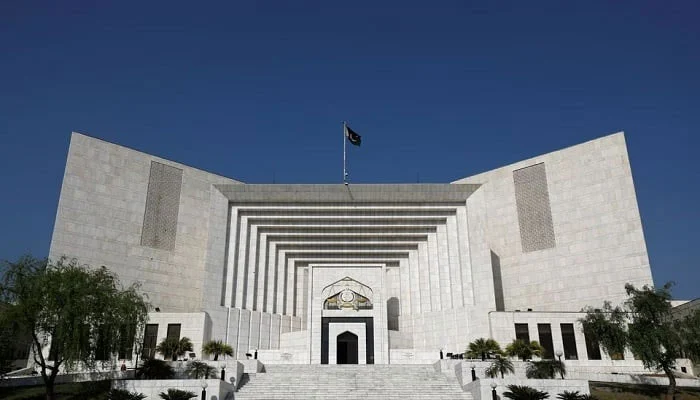
The Supreme Court of Pakistan issued a significant ruling on presidential transfer powers, affirming that the president can independently transfer high court judges but only under specific constitutional conditions. In a detailed 55-page verdict released on Thursday, the court stated that while the president’s authority under Article 200 of the Constitution stands on its own, it remains subject to safeguards to protect judicial independence.
Background of the Case
This landmark judgment followed petitions filed by five Islamabad High Court (IHC) judges earlier this year. The judges—Justice Mohsin Akhtar Kiyani, Justice Tariq Mehmood Jahangiri, Justice Babar Sattar, Justice Sardar Ejaz Ishaq Khan, and Justice Saman Riffat Imtiaz—challenged the president’s authority to transfer judges without clear public interest. They argued that unchecked powers would undermine the separation of powers and the independence of the judiciary.
The judges moved the Supreme Court under Article 184(3) of the Constitution. Their plea objected to the appointment of Justice Sarfraz Dogar as acting chief justice of the IHC and contested the transfer of certain judges. They asked the court to rule that the president must exercise transfer powers only with strong justification and in a way that does not disrupt the judiciary’s internal hierarchy.
Constitutional Bench and Verdict
A larger Constitutional Bench of the Supreme Court heard the case. The bench was headed by Justice Muhammad Ali Mazhar and included Justices Naeem Akhtar Afghan, Shahid Bilal Hassan, Salahuddin Panhwar, and Shakeel Ahmad. After months of hearings, the court announced a 3-2 majority decision.
Justice Mazhar, Justice Hassan, and Justice Panhwar dismissed the petitions, affirming the president’s authority to transfer judges. They held that Article 200 provides an independent framework for transfers, separate from other constitutional provisions dealing with judicial appointments. Justices Afghan and Ahmad dissented, supporting the petitioners and seeking to strike down the transfer notifications.
Read: Pakistan Holds Nerve to Reach Asia Cup Final
Article 200 Explained
The judgment clarified the scope of Article 200. It stated that the president’s power to transfer a judge from one high court to another is not linked to any other article of the Constitution. However, the exercise of this power is not absolute. The president must first obtain the judge’s consent and consult both the chief justice of Pakistan and the chief justices of the concerned high courts.
The bench emphasized that these requirements act as “safety measures and safeguards” to prevent arbitrary transfers. The president cannot bypass these steps, ensuring that the process respects judicial independence and established protocols.
Distinction from Judicial Appointments
The court also addressed the relationship between transfers and appointments. It ruled that a transfer under Article 200 cannot be treated as a fresh appointment. This distinction separates the president’s transfer authority from the appointment process under Article 175A, which involves the Judicial Commission of Pakistan.
According to the verdict, the two provisions deal with different situations. Article 175A governs the appointment of judges to the Supreme Court, High Courts, and Federal Shariat Court, while Article 200 specifically covers the transfer of high court judges. The bench stressed that conflating the two could create constitutional confusion and weaken judicial safeguards.
Seniority Concerns Dismissed
The petitioners also raised concerns about seniority. They argued that the transfer of judges could unfairly affect their ranking within the judiciary. They requested that the court maintain their seniority over newly appointed judges who take oath after them.
The majority of the bench rejected this claim. It held that seniority disputes fall outside the scope of the president’s transfer authority. The decision confirmed that the date of oath-taking determines a judge’s seniority, and transfers do not amount to reappointments that could reset the seniority order.
Conditions for Presidential Action
While upholding the president’s power, the Supreme Court reinforced the need for procedural compliance. The president must consult the chief justice of Pakistan and the chief justices of both high courts before issuing a transfer order. The consent of the judge concerned remains a mandatory requirement.
These conditions act as constitutional safeguards. They balance the president’s independence with the judiciary’s need for protection from political influence. The court warned that any transfer without fulfilling these steps would violate the Constitution and could be challenged in the future.
Implications of the Ruling
This verdict sets a critical precedent for future judicial transfers. By clarifying the limits of presidential authority, the Supreme Court has drawn a line between necessary executive action and the independence of the judiciary. The decision signals that while the president can exercise transfer powers, he cannot do so unilaterally or for political motives.
Legal experts view the ruling as a reaffirmation of constitutional checks and balances. It strengthens judicial autonomy while preserving the president’s constitutional role. For the judiciary, the decision provides clarity on the procedures and protections surrounding transfers, ensuring transparency in future cases.
Moving Forward
The Supreme Court’s decision highlights the delicate balance between executive authority and judicial independence. With this ruling, the court has ensured that the president’s powers to transfer high court judges remain effective yet controlled. Future presidents must now navigate these constitutional conditions carefully, respecting both the letter and spirit of the law when exercising their authority.
Follow us on Instagram, YouTube, Facebook,, X and TikTok for latest updates
