
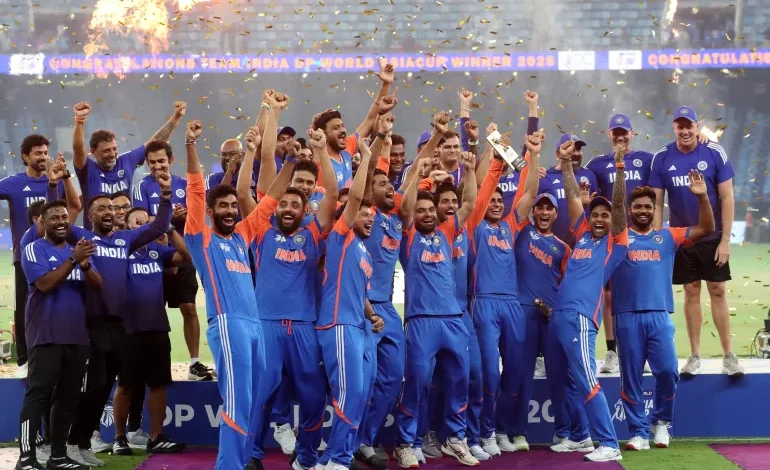
India’s dramatic win in the Asia Cup final has taken a political turn after Prime Minister Narendra Modi linked the cricket triumph to Operation Sindoor, the military action that escalated India–Pakistan tensions earlier this year. Modi congratulated the team with a message on X that read, “#OperationSindoor on the games field. Outcome is the same – India wins!” His statement has drawn sharp reactions across the region as cricket and politics collide once again.
A Charged Celebration
India defeated Pakistan by five wickets in the Asia Cup 2025 final at the Dubai International Cricket Stadium. Fans celebrated the thrilling victory, but Modi’s remarks immediately overshadowed the sporting achievement. By comparing the cricket win to Operation Sindoor, a military operation that brought both nations to the brink of war in May, Modi revived painful memories of the deadly conflict.
Operation Sindoor’s Shadow
Operation Sindoor was launched after a deadly attack in Indian-administered Kashmir killed 22 tourists, an incident New Delhi blamed on Pakistan. Islamabad strongly denied the accusation. The four-day conflict involved missile and drone strikes that left more than 70 people dead on both sides. Although both nations claimed victory, the brief war deepened the already strained relationship between the nuclear-armed rivals. Modi’s decision to invoke this operation during a cricket celebration has renewed diplomatic unease.
Pakistan Reacts Cautiously
Islamabad has not issued an official response to Modi’s remarks, but Pakistani media and political analysts condemned the statement as provocative. Critics argue that linking a cricket match to a military conflict undermines the spirit of sportsmanship and risks inflaming public sentiment. The comment comes at a time when efforts to resume dialogue between the two countries remain fragile.
Read: India vs Pakistan Asia Cup Final Thrills Fans
Tense Atmosphere on the Field
The Asia Cup final itself reflected the tension between the two sides. Players from India and Pakistan avoided shaking hands throughout the tournament. After the final match, the Indian team reportedly refused to accept the trophy directly from Asia Cricket Council (ACC) chief Mohsin Naqvi, who also serves as Pakistan’s interior minister and heads the Pakistan Cricket Board. Former New Zealand cricketer Simon Doull announced that the team would not collect their awards from Naqvi due to political sensitivities.
Trophy Presentation Dispute
According to reports, Naqvi declined to step aside from the presentation ceremony despite the Indian team’s stance. The Indian players ultimately celebrated on their own without the traditional exchange of pleasantries. The scene highlighted how geopolitical tensions spilled over into the sporting arena, turning what should have been a moment of unity into another point of division.
Historical Rivalry Runs Deep
India and Pakistan share a long and complex history of conflict, including four previous wars and countless military standoffs since their partition in 1947. Cricket matches between the two nations often serve as symbolic battles, with victories celebrated as more than just sporting achievements. Modi’s reference to Operation Sindoor reinforces this narrative, casting India’s win as a continuation of political rivalry rather than a stand-alone sporting triumph.
Public Reactions
Reactions within India were mixed. Supporters of Modi praised his bold statement and celebrated the win as a double victory—on the cricket field and in national pride. Others criticized the prime minister for politicizing sports and deepening divisions. Social media lit up with debates, with hashtags related to Operation Sindoor trending in both India and Pakistan within hours of his post.
Military Losses Acknowledged
The controversy comes months after an Indian naval officer admitted that India lost several fighter jets to Pakistani fire during the May conflict. The officer cited operational constraints imposed by New Delhi as a factor in the losses. This admission, combined with Modi’s celebratory remarks, has fueled discussions about the true cost of Operation Sindoor and its ongoing impact on regional stability.
Cricket Caught in Politics
Cricket has long been a rare space where citizens of both nations could share a common passion despite political hostilities. However, this Asia Cup final demonstrated how fragile that boundary has become. With players avoiding handshakes, officials clashing over trophy presentations, and leaders using matches as political symbols, the game is now firmly entangled with diplomatic tensions.
The Road Ahead
The fallout from Modi’s statement is expected to linger beyond the Asia Cup. Analysts warn that such rhetoric could complicate future cricket tournaments, bilateral talks, and regional peace efforts. As both nations look toward upcoming international fixtures and possible negotiations, the shadow of Operation Sindoor—and its invocation on a cricket field—will remain a powerful reminder of how politics can redefine even the simplest of games.
India’s Asia Cup triumph should have been a celebration of sporting excellence. Instead, it has become another flashpoint in the enduring rivalry between India and Pakistan, where every win, loss, and word carries weight far beyond the boundary line.
Follow us on Instagram, YouTube, Facebook,, X and TikTok for latest updates
