
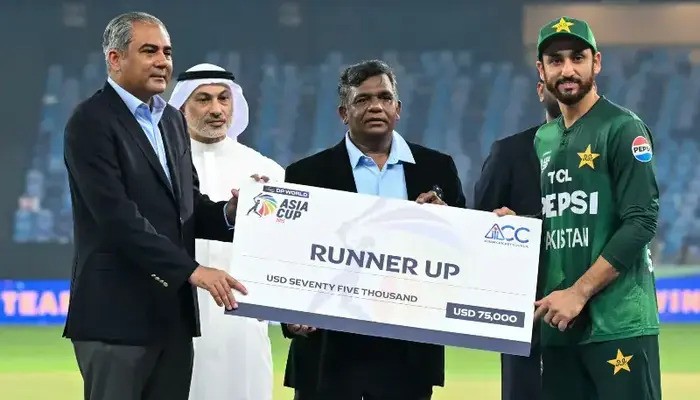
PCB and ACC Chairman Mohsin Naqvi strongly denied Indian media reports that he apologised to the Board of Control for Cricket in India (BCCI) over the Asia Cup trophy controversy. The keyword Asia Cup trophy has remained at the heart of the dispute between the two cricketing boards, fueling new tensions after the 2025 final in Dubai.
Trophy Handover Sparks Fresh Row
The Asia Cup closing ceremony turned into an embarrassing episode when the Indian team refused to collect the trophy from Naqvi. The incident marked one of the lowest points in Indo-Pak cricketing ties. After India’s victory, skipper Suryakumar Yadav complained that his team was denied the Asia Cup trophy.
Later, Indian media alleged that Naqvi had declined to hand over the trophy during the presentation. Adding to the confusion, fresh reports claimed he had apologised privately to the BCCI while still refusing to personally give them the prize.
Read: Galatasaray Stun Liverpool with 1-0 Champions League
Naqvi’s Sharp Response
Responding on social media, Naqvi dismissed the reports as “fabricated nonsense.” He wrote that Indian media “thrives on lies, not facts” and firmly declared, “I have never apologised to the BCCI nor will I ever do so.”
The PCB chief described the reports as “cheap propaganda” aimed at misleading the Indian public. He stressed that he had done nothing wrong during the ceremony and remained ready to hand over the trophy in an official capacity.
“As ACC chairman, I was prepared to present the Asia Cup trophy that day and I am still prepared now,” Naqvi said. “If India wants it, they are welcome to collect it from the ACC office.”
Politics Overshadows the Spirit of Cricket
Naqvi accused India of dragging politics into cricket and damaging the sport’s reputation. According to him, the Asia Cup final should have celebrated the game, not been turned into a political battlefield. He argued that the refusal to accept the trophy undermined the values of sportsmanship and respect.
This was not the first flashpoint during the tournament. Earlier, Naqvi had criticised Yadav for dedicating India’s victory to the victims of the Pahalgam terrorist attack, a move he described as politicising cricket.
Background of Strained Relations
Tensions between India and Pakistan had already worsened earlier this year after a brief military escalation. India carried out air strikes in Pakistan following the Pahalgam attack in occupied Kashmir, while Pakistan denied involvement. The crisis cooled only after U.S. intervention, but relations remained fragile.
These tensions spilled into cricket during the Asia Cup. Naqvi argued that cricket should unite fans across borders, but political undertones disrupted the competition. The controversy over the Asia Cup trophy only deepened mistrust between the two boards.
ICC Interventions During Asia Cup
The Asia Cup 2025 also saw disciplinary action from the International Cricket Council (ICC). The PCB lodged a formal complaint against Yadav’s remarks, leading to him being fined 30 percent of his match fee for breaching the ICC Code of Conduct.
Meanwhile, Pakistani players Haris Rauf and Sahibzada Farhan faced reprimands for gestures made during their Super Four clash with India. These sanctions reflected the rising tensions on and off the field.
Political Leaders Enter the Debate
The Asia Cup trophy row escalated further when Indian Prime Minister Narendra Modi congratulated his team, calling their win a continuation of “Operation Sindoor.” This military-themed reference drew criticism in Pakistan, where many viewed it as an attempt to link sport with conflict.
Naqvi hit back with a sharp response, writing on X: “If war was your measure of pride, history already records your humiliating defeats at Pakistan’s hands. No cricket match can rewrite that truth.”
He added that linking cricket victories to war “only exposes desperation and disgraces the spirit of the game.”
Cricket Diplomacy Under Strain
The Asia Cup trophy saga revealed how cricket remains entangled in the broader political rivalry between India and Pakistan. While fans hoped for a celebration of talent and competition, the event highlighted mistrust and propaganda.
Naqvi’s refusal to back down and his rejection of the reported apology signaled Pakistan’s firm stance. On the other hand, India’s refusal to accept the trophy from him showed how symbolic acts carry weight in regional rivalries.
For now, the Asia Cup trophy remains a symbol of controversy rather than celebration, reminding both nations how politics can overshadow even the most cherished sporting traditions.
Follow us on Instagram, YouTube, Facebook,, X and TikTok for latest updates
