
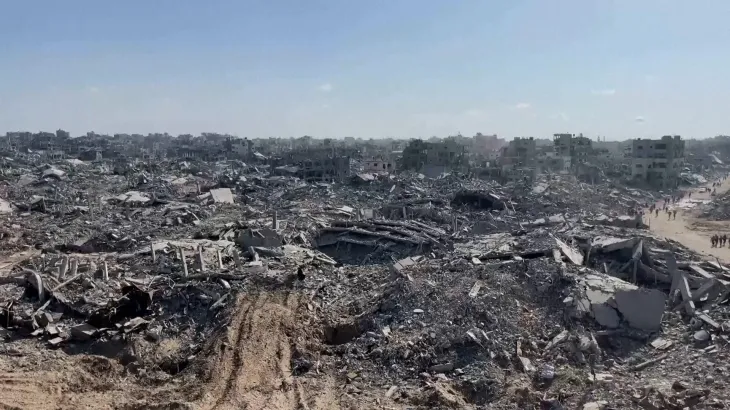
Amid fragile hopes for peace, thousands of Palestinians have begun returning to northern Gaza under a new ceasefire. What greets them is a haunting landscape: homes leveled, neighborhoods erased, lives shattered. The keyword “northern Gaza return” now carries both longing and despair.
Ceasefire Opens Way Home
Following an agreement between Israel and Hamas, displaced Gazans were permitted to travel back north. They traversed battered roads, crossed checkpoints, and made long journeys often on foot. Many came from southern shelters where they’d spent months in limbo.
But the path home offered little comfort. In place of once-familiar streets and buildings, they found devastation. Israeli forces had pulled back from many urban areas, allowing returnees to glimpse what remained of their houses — and what was lost.
Discovering What’s Left
In Khan Younis and Gaza City, returnees stepped over rubble and stared at skeletons of buildings. Many found nothing — no walls, no doors, no windows. Some entire blocks had vanished. One man, amid the debris, assessed his “home” only to find a pile of twisted concrete and metal.
Others discovered signs of life amid destruction: a charred pot, a mangled appliance, a remnant photo frame. These fragments felt both cruel and precious.
Journalists reported scenes of people sifting through ruins, looking for personal belongings, wallets, jewelry — anything that might connect them to a past life. But often, there was nothing left to salvage.
Read: Hostages Freed as Trump Hails “New Middle East” in Israel
Searching for Loved Ones Under Debris
Beyond loss of property, many returnees faced a deeper pain: missing family members. In the smashed remains of homes, they crawled through dust and crumbling walls, calling out names, hoping for a sign.
Civil defence agencies estimate about 10,000 bodies still lie beneath the rubble in northern Gaza. Search teams — often equipped only with basic tools — focus first on bodies lying in open spaces. Then they attempt to dig into collapsed structures, though risk from unexploded ordnance and structural collapse is high.
One returning man described finding only fragments of remains — bone shards, a few personal items — of his parents in the ruins of their home. Cemeteries too often lay destroyed, forcing hurried burials next to whatever standing graves remained.
Emotions Behind the Return
The return is not a homecoming; it is a home-seeing. For many, it’s their first glimpse in years of what they once called home. The emotional weight is immense: grief, guilt, anger, disbelief.
One returnee said he felt both joy and heartbreak — glad to be back, but horrified by the devastation. Another told reporters their house “had been completely erased.”
Memories — of children playing, meals shared, rooms warmed by sunlight — clash with the ruin. Some stood in the ruins and wept. Others simply sat, stunned.
Risk Lurks in Return
Beyond emotional scars, physical dangers loom. Many roads remain blocked. Buildings stand unstable. Unexploded bombs and shell fragments hide under dust. Returnees risk injury or death just walking home.
Essential services are crippled. Water, electricity, toilets — none may function. In southern Gaza, past ceasefire returns have shown that basic infrastructure must be rebuilt before long-term habitation is possible.
What Remains to Be Done
The challenges ahead are immense. Clearing debris, locating bodies, rebuilding water and power systems — all must begin, often with limited resources.
International aid has been slow to enter. Aid agencies must now scale up support: shelter, food, medicine, mental health services. But access, coordination, and security remain hurdles.
Reconstruction is not simply about buildings. It’s about restoring dignity, hope, and community. Rebuilding a sense of safety after years of conflict will take far more than bricks.
A Return That Is Never Complete
Returning to northern Gaza is an act of memory and defiance. Even when homes are lost, the act of returning asserts belonging. For many Palestinians, it is a statement: land matters, roots matter.
But as they return, they step into a suspended world — one where the past is gone and the future is fragile.
Follow us on Instagram, YouTube, Facebook,, X and TikTok for latest updates
