
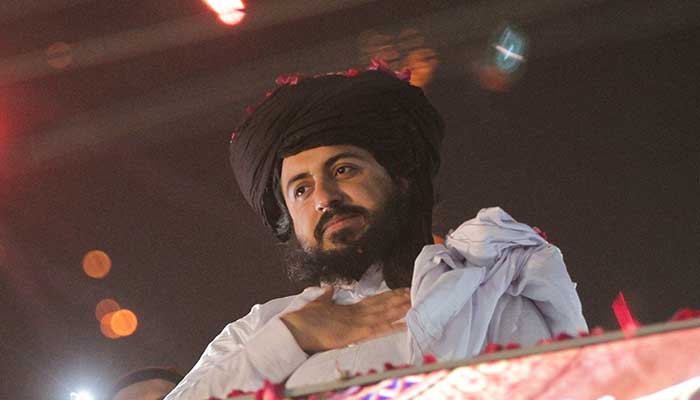
Law enforcement agencies have traced TLP chief Saad Rizvi, sources confirmed, as Islamabad and Rawalpindi slowly return to normal after days of violent protests. The keyword “TLP crackdown” now defines a tense chapter in Pakistan’s political unrest, with authorities vowing to arrest Rizvi and other leaders soon.
Saad Rizvi and Leaders Traced
Police and intelligence agencies have reportedly located Saad Hussain Rizvi and senior TLP leader Anas Rizvi following a widespread search operation. Officials say both leaders are expected to be arrested shortly.
Sources advised them to surrender voluntarily, assuring that law enforcement agencies (LEAs) would ensure they receive proper medical care once in custody. However, their current health conditions remain uncertain.
Protest Escalation and Police Response
The recent TLP march towards Islamabad intensified after party workers refused to disperse, citing similar demonstrations in Europe. The confrontation reached its peak in Muridke, which became the flashpoint for violent clashes.
Police alleged that a rifle recovered from Anas Rizvi was used during the protest. The clashes resulted in at least three confirmed deaths — a TLP worker, a police officer, and a bystander. Despite social media claims of higher casualties, officials labeled those figures “exaggerated.”
Read: Pakistan-Afghanistan Border on Edge as Troops Remain on Alert
FIR Registered Against TLP Leaders
Authorities have registered a First Information Report (FIR) against Saad Rizvi and several local TLP leaders at the Rawat Police Station in Rawalpindi. The FIR, filed by Sub-Inspector Najeeb Ullah, includes anti-terror clauses and names 23 suspects, including Qari Bilal and other senior members.
The report alleges that Rizvi and his followers blocked major roads, attempted to snatch ammunition from the police, and carried petrol bombs and nail-embedded sticks. It further claims that protesters ignored Section 144 restrictions and opened fire on police, injuring Constable Adnan.
Another officer, Constable Nazeer, was attacked by Qari Danish and others. Police say they recovered teargas shells, nail-studded sticks, and petrol bombs from the scene.
In total, 25 separate cases have been filed at various police stations in Lahore, including Islampura, Badami Bagh, and Shahdara. These cases contain charges of terrorism, murder, attempted murder, rioting, and kidnapping.
Planned Attacks and Violence
Officials described the TLP’s protest as a “planned campaign of violence”, claiming that protesters deliberately provoked clashes. Police said negotiations were underway when leaders allegedly incited the crowd to attack security personnel.
Between October 12 and 13, protesters resorted to stone pelting and used petrol bombs and spiked sticks against officers. Weapons were also snatched from law enforcement, and initial forensic reports indicate bullets fired at the scene came from stolen police guns.
In response, police launched tear gas and baton charges to control the situation. However, the crowd turned more aggressive, targeting police vehicles and setting property ablaze.
Scale of Damage and Injuries
According to initial police reports, 40 vehicles — both government and private — were torched. Several shops were also set on fire.
At least 48 police personnel were injured in the clashes, with 17 sustaining gunshot wounds. Among civilians, about 30 people were wounded, and three TLP workers were confirmed dead.
Witnesses described scenes of chaos as protesters hijacked a university bus and used it to block roads. Some reportedly tried to drive into crowds. Law enforcement officers arrested multiple suspects during the operation, though several senior TLP figures, including Saad Rizvi, managed to flee.
Law Enforcement’s Stance
Police have emphasized that the protests were anything but peaceful. “Snatching weapons, throwing petrol bombs, and burning vehicles cannot be justified as a political protest,” one official stated. “Those involved in violence will face the full force of the law.”
Authorities said the operation was carefully planned to avoid large-scale civilian casualties. The situation, though tense, has now been brought under control.
City Life Slowly Returns
With the crackdown over, Islamabad and Rawalpindi are gradually regaining normalcy. The Metro Bus service has been partially restored, running from Saddar Station to Kashmir Highway. However, service between Faiz Ahmed Faiz Station and Pak Secretariat remains suspended due to security containers at D-Chowk.
Officials confirmed that the route to Islamabad International Airport has reopened. The Faizabad Interchange, which had been closed for six days, is now accessible.
Authorities have also directed the reopening of transport terminals, hotels, restaurants, hostels, and markets in both cities. The administration stated that full metro operations and traffic routes will resume in phases as security improves.
Political Uncertainty Ahead
While order has been temporarily restored, the TLP’s future course remains uncertain. The group has not issued an official statement since the operation, and senior members remain underground.
Observers believe the government’s firm stance signals a shift in how future demonstrations will be handled. Yet, the movement’s widespread support could make any long-term calm fragile.
As the search for Saad Rizvi continues, the TLP crackdown underscores Pakistan’s ongoing struggle to balance political dissent with public security — a conflict that continues to shape the nation’s streets and its politics.
Follow us on Instagram, YouTube, Facebook,, X and TikTok for latest updates
