
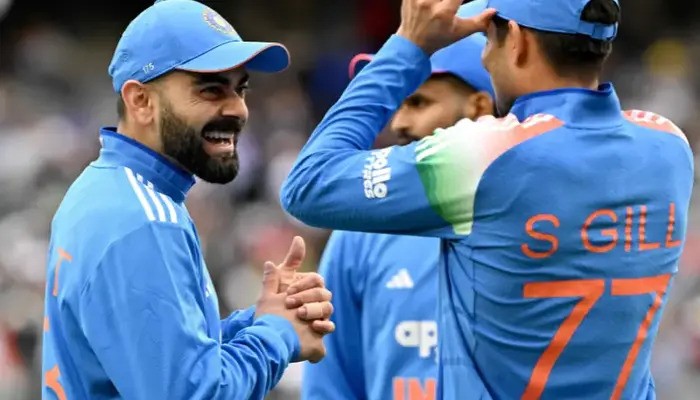
India’s innings faltered under heavy rain and fiery Australian bowling, setting a modest 131-run target in the opening ODI at Perth on Sunday. The India vs Australia ODI captures the tense start to the series, marked by constant interruptions, sharp bowling spells, and brief flashes of brilliance from KL Rahul. Despite Rahul’s quickfire 38 off 31 balls, India managed only 136-9 in 26 overs before the match was adjusted under the Duckworth-Lewis System (DLS).
Rain Disrupts the Opening Clash
The first ODI between the two cricketing giants began with high anticipation but soon turned chaotic as rain repeatedly halted play. Persistent showers frustrated both teams, breaking momentum and forcing umpires to revise overs several times.
Australia’s captain, Mitchell Marsh, wisely chose to field first, reading the dark Perth skies and damp outfield. His decision paid off almost instantly as his pace attack dismantled India’s top order before the first rain break.
Hazlewood and Starc Dominate Early
Josh Hazlewood and Mitchell Starc struck early, giving Australia complete control. Hazlewood, maintaining a tight line and length, dismissed Rohit Sharma for 8, caught smartly at second slip. Moments later, Starc delivered a perfect outswinger that removed Virat Kohli for a duck, silencing Indian fans in the stands.
At 21-2, India’s innings looked shaky. The conditions favored seamers, and Australia’s bowlers exploited every bit of movement available. Hazlewood and Starc combined sharp swing with disciplined accuracy, making scoring nearly impossible.
Read: Bengals Shock Steelers in Thrilling Shootout
Indian captain Shubman Gill tried to steady the innings, but his brief resistance ended at 10 runs when Nathan Ellis induced an edge that wicketkeeper Josh Philippe safely caught. With the scoreboard reading 23-3 after 8.5 overs, the first rain delay halted play once more.
India Struggle to Rebuild
When play resumed, India faced another setback as Shreyas Iyer gloved a rising delivery from Hazlewood to Philippe. The scoreboard slipped to 45-4, and the innings lost rhythm once again as the rain returned, delaying the game for an extended period.
The repeated interruptions made batting difficult. The ball gripped and moved unpredictably on the damp pitch, while Australia’s bowlers adjusted seamlessly after every restart. India’s middle order failed to find stability, leaving the lower order with the task of pushing the total to a respectable figure.
Rahul’s Counterattack Brings Hope
KL Rahul, however, brought a spark to India’s innings. Playing with controlled aggression, he punished loose deliveries and tried to break the pressure. His 38 runs off 31 balls included two massive sixes that briefly lifted India’s tempo.
Rahul’s timing and composure stood out amid the collapse. But just as he appeared set to launch a late charge, he fell attempting a third six, caught at the boundary. His dismissal ended India’s last serious hope of building momentum.
Lower Order Fights to the End
Nitish Reddy offered a final push, scoring 19 valuable runs in the last two overs. His clean hitting helped India cross 130, a total that looked slightly competitive given the pitch conditions and the DLS adjustments.
However, Australia’s bowlers never lost control. Hazlewood finished with superb figures, while Starc and Ellis backed him with tight spells that kept India on the defensive. Every time India tried to accelerate, a wicket fell, and the innings lost flow again.
The rain-shortened match ended with India posting 136-9 in 26 overs. Under DLS rules, Australia’s revised target was set at 131 runs.
Conditions Favor Australia’s Chase
Given the conditions, Australia hold the upper hand. The wicket has movement for pacers, but chasing 131 in 26 overs should be manageable if their top order avoids early trouble. With openers in good form and a deep batting lineup, Australia are well positioned to capitalize.
India, on the other hand, will rely heavily on their bowlers to create pressure early. Seamers like Jasprit Bumrah and Mohammed Siraj will need to replicate the kind of accuracy that Hazlewood and Starc displayed earlier. Early wickets will be crucial to turning the game around.
The challenge for India will be maintaining intensity despite the frustration of constant rain delays. Bowling under lights and in damp conditions can be tricky, especially if the ball becomes slippery. Fielding discipline and tactical variations will be essential.
A Test of Patience and Strategy
This India vs Australia ODI has turned into a contest of endurance more than power. The unpredictable weather, the stop-start rhythm, and the bowler-friendly surface have tested both sides’ mental strength. For India, it’s an early reminder that adapting to conditions is key on Australian soil.
For the hosts, it’s an opportunity to start the series with a statement win. The target may be modest, but discipline will be vital to avoid unnecessary risks.
As the game resumes, all eyes will be on Marsh’s men to see if they can chase the revised target with precision—or if India’s bowlers can script a dramatic turnaround under the Perth lights.
Follow us on Instagram, YouTube, Facebook,, X and TikTok for latest updates
