
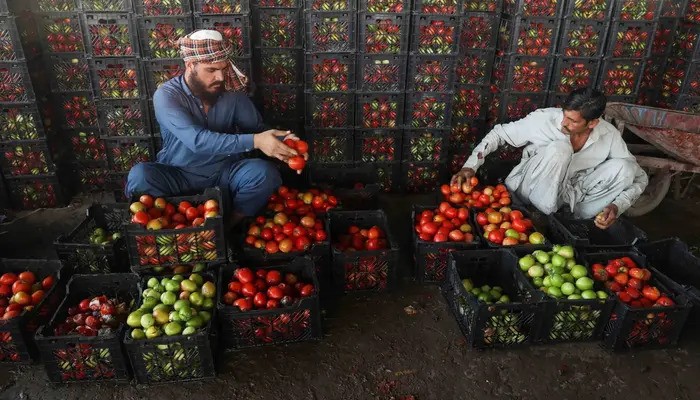
A prolonged closure of the Pak-Afghan border has sharply driven up prices of essential goods, particularly tomatoes, which now cost nearly five times more in local markets. The shutdown, which began on October 11 after deadly clashes between the two countries, has disrupted trade and left thousands of containers stranded at key crossings.
Prices Surge as Trade Halts
The 12-day closure has hit traders and consumers hard. Fresh produce, including tomatoes, apples, and grapes, has become scarce in markets across Balochistan, Khyber Pakhtunkhwa, and Punjab. Tomatoes—staples in Pakistani kitchens—now sell for around Rs600 per kilogram, a 400 percent jump since fighting erupted earlier this month. Apples, largely imported from Afghanistan, are also selling at inflated rates.
Officials say roughly 5,000 containers loaded with perishable items are stuck on both sides of the border. “We have no information when the border will reopen,” a senior official in Chaman said. Traders have urged authorities to resume trade, warning of severe economic losses.
Millions Lost Each Day
According to Khan Jan Alokozay, head of the Pak-Afghan Chamber of Commerce in Kabul, both sides are losing nearly $1 million daily due to the suspension of trade. Annual trade between Pakistan and Afghanistan amounts to about $2.3 billion, with goods like fruit, vegetables, minerals, medicine, and food staples forming the bulk of the exchange.
Read: Pakistan Outlaws TLP After Deadly Punjab Clashes
The halt in transit has not only affected merchants but also disrupted supply chains feeding small businesses that rely on cross-border movement for daily operations.
Waiting for Istanbul
A senior Pakistani official has ruled out reopening the border before the upcoming Islamabad-Kabul meeting in Istanbul on October 26. “Future trade and business activities will depend on the outcome of that meeting,” businessman Imran Khan Kakar told Dawn.
For now, authorities have opened the Friendship Gate briefly to allow Afghan refugees to return home. But immigration and travel for visa holders remain suspended. An FIA official reported that over 5,000 Pakistanis are stranded in Spin Boldak after visiting for small business transactions.
Customs Clearance Suspended
Customs authorities confirmed that clearance operations for both imports and exports have been halted at major crossings, including Torkham, Ghulam Khan, Kharlachi, and Angoor Adda since October 12, and at Chaman since October 15.
The Federal Board of Revenue (FBR) stated that the suspension followed “unprovoked aggression” from Afghan forces that endangered customs officials. As a result, over 1,000 trucks carrying transit and export goods remain stranded.
At the Torkham crossing alone, 255 export trucks and 24 import vehicles are stuck at terminals, while 200 more are waiting along the Jamrud–Landi Kotal route. Meanwhile, the Chaman border faces lighter congestion, with 25 export and five import trucks still awaiting clearance.
Safety Measures for Officials
Due to rising security risks, most customs staff have been moved back to headquarters. A small number of officers remain at border stations to resume operations once conditions stabilize. The FBR says it is monitoring the situation closely and will act quickly to restore trade once safe passage is ensured.
Efforts to Ease Market Pressure
To prevent further shortages, collectorates in the Northern Region have cleared import consignments that arrived before the border shutdown. However, shortages continue to affect consumers, and prices remain unstable in wholesale markets.
Vegetable vendors in Quetta and Peshawar report limited supplies arriving from local farms, insufficient to meet demand. “We receive half the usual stock, and prices change daily,” said one trader at a Quetta market.
Broader Impact
The extended closure has intensified inflationary pressures at a time when Pakistan is already facing economic challenges. Food vendors, exporters, and transporters are all bearing the brunt. “If the border doesn’t open soon, small traders will collapse,” warned an exporter from Peshawar.
Authorities hope that diplomatic engagement in Istanbul will bring relief to both sides and restore trade channels that serve as lifelines for communities along the 2,600-kilometre frontier. Until then, the border silence continues to weigh heavily on wallets and markets across Pakistan.
Follow us on Instagram, YouTube, Facebook,, X and TikTok for latest updates
