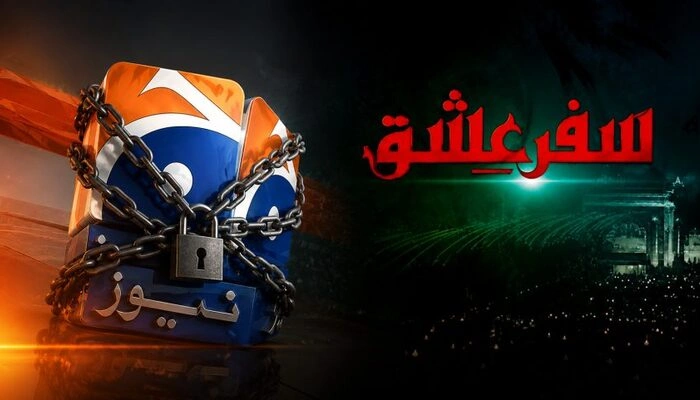
The Pakistan Electronic Media Regulatory Authority (PEMRA) has suspended the transmission licence of Geo News for 15 days after the channel aired religious visualisations during a special Muharram transmission that the regulator said were capable of hurting religious sentiments and undermining religious harmony.
The regulatory action followed widespread public criticism and complaints from viewers who objected to visuals aired during the channel’s special programme on 10th Muharram (Ashura). The incident quickly sparked outrage across Pakistan, with religious scholars, social media users and members of the public condemning the broadcast and demanding strict action against the television network.
PEMRA Orders 15-Day Suspension
According to PEMRA, Geo News aired religious visualisations during its programme Safar-e-Ishq on June 26, 2026. The regulator stated that, given the religious sensitivity of the subject, the content was prima facie liable to hurt the religious sentiments of viewers, undermine religious harmony and disturb public order.
The authority suspended the channel’s licence with immediate effect for 15 days and directed all cable operators and distribution platforms to stop its transmission during the suspension period. The matter has also been referred to PEMRA’s Council of Complaints for further proceedings, while Geo News has been directed to conduct an internal inquiry into the editorial lapse and submit its findings.
Geo News Issues Public Apology
Following the controversy, Geo News issued a public apology, stating that the material had been aired in error and did not reflect the channel’s editorial policy or beliefs.
The broadcaster said the footage had been intended to depict certain rituals and customs observed in parts of Iraq and the Middle East and maintained that it was not meant to promote any particular religious viewpoint. The channel also removed the disputed content from its platforms.
The criticism has continued, with many questioning how such content could be broadcast by one of Pakistan’s largest and most experienced television networks.
Religious Scholars Express Strong Resentment
Several religious scholars (Ulema) strongly condemned the broadcast and said the airing of visual depictions associated with revered Islamic personalities deeply hurt the sentiments of Muslims.
According to the scholars, the incident has raised serious concerns about editorial oversight and professional responsibility in Pakistan’s electronic media.
Some scholars have called for stricter action against the broadcaster, with a number of them demanding that Geo News face a permanent ban instead of a temporary suspension.
They argued that media organizations have a responsibility to exercise the highest level of editorial caution when producing or broadcasting religious content, particularly during Muharram, one of the most sacred periods in the Islamic calendar.
Comparisons Drawn With Past International Controversies
During their statements, some religious scholars compared the controversy with previous incidents in Western countries, including the publication of caricatures of the Prophet Muhammad (peace be upon him) that triggered protests across the Muslim world.
They said Muslims in Pakistan had previously condemned such incidents abroad and expressed disappointment that a controversy involving religious visualisations had now emerged within the country’s own media landscape.
The scholars maintained that respect for the Prophet Muhammad (peace be upon him) and other revered Islamic personalities is a fundamental part of the faith and should never be compromised.
These comparisons were made by religious scholars during their public reactions to the controversy.
Why Are Depictions of the Prophet Muhammad (Peace Be Upon Him) and Other Sacred Personalities Prohibited?
Many Islamic scholars explain that visual depictions of the Prophet Muhammad (peace be upon him) are generally prohibited in Sunni Islamic tradition.

According to scholars, this prohibition aims to preserve the dignity and sanctity of the Prophet, prevent misrepresentation, and eliminate any possibility of personality worship or disrespect.
Read more: Ketan Agarwal Murder Case: What Police Have Revealed About Siya Goyal and Chetan Chaudhary
For this reason, depictions of the Prophet peace be upon him and other revered Islamic personalities remain an extremely sensitive issue in many Muslim-majority countries, including Pakistan.
Because of these deeply held religious beliefs, broadcasters are generally expected to exercise exceptional care when producing or airing religious content.
Questions Raised Over Editorial Standards
The controversy has also triggered debate over editorial responsibility within Pakistan’s television industry.
Media analysts and members of the public have questioned how content considered religiously sensitive was approved for broadcast despite multiple editorial and compliance mechanisms that exist within major television networks.
PEMRA, in its order, also observed that the broadcaster had failed to exercise the required level of editorial judgment and caution while airing the programme.
The regulator has instructed the channel to identify the editorial and monitoring failures that led to the incident and recommend measures to prevent similar occurrences in the future.
Investigation and Further Proceedings Continue
While Geo News has apologized and the regulator has imposed a 15-day suspension, the matter has not yet concluded.
PEMRA has referred the case to its Council of Complaints, which will review the incident and may recommend further action if considered necessary under the law.
The controversy continues to generate widespread discussion across Pakistan, with many calling for stronger editorial safeguards when dealing with religious programming.

-
-

-

-