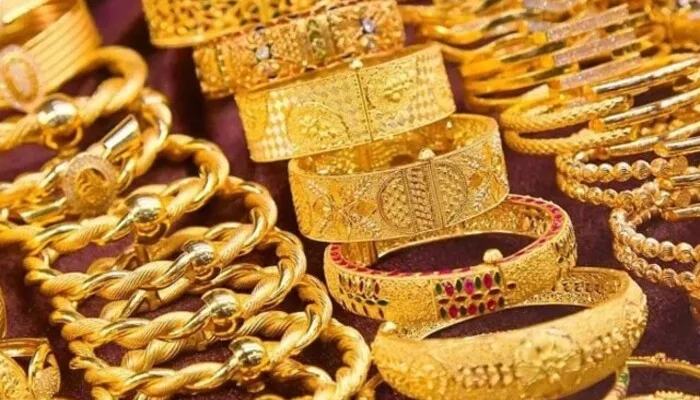
Gold prices in Pakistan declined on Monday, June 29, 2026, following losses in the international bullion market as easing geopolitical tensions reduced demand for safe-haven assets.
According to the All Pakistan Sarafa Gems and Jewellers Association (APSGJA), the price of 24-karat gold fell by Rs2,300 per tola, settling at Rs428,936, compared with Rs431,236 in the previous trading session.
The decline mirrors the movement in global gold prices, where investors shifted toward riskier assets amid signs of improving diplomatic conditions in the Middle East. Despite the latest correction, analysts believe gold remains an important investment for those seeking protection against inflation and economic uncertainty.
Gold prices decline in domestic market
The domestic bullion market witnessed a broad decline across major gold categories.
The price of 24-karat gold per 10 grams fell by Rs1,972, bringing it down to Rs367,743.
Jewellers said the reduction was largely driven by lower international gold prices, which continue to play a key role in determining local bullion rates alongside fluctuations in the Pakistani rupee.
Although the decline offers some relief to consumers planning to purchase gold jewellery or invest in bullion, prices remain significantly higher than historical averages due to strong gains recorded over the past year.
Market participants continue to monitor daily movements in international prices, which directly influence local trading.
Silver prices also move lower
Silver prices also followed the downward trend in the precious metals market.
According to the latest rates issued by APSGJA, the price of silver per tola declined by Rs69, settling at Rs6,324.
Like gold, silver prices are influenced by international commodity markets, investor sentiment, industrial demand, and currency movements.
The simultaneous decline in both precious metals reflects softer global demand for safe-haven investments during Monday’s trading session.
International gold prices retreat
In the international bullion market, gold prices fell by $23 per ounce, with the precious metal trading around $4,065 per ounce.
Analysts attributed the decline to improving investor confidence following signs of reduced geopolitical tensions, prompting many investors to shift funds away from traditional safe-haven assets.
Gold prices typically rise during periods of global uncertainty as investors seek stability. Conversely, easing political tensions often encourage investors to move toward equities and other higher-risk investments, putting downward pressure on bullion prices.
The latest decline reflects this changing market sentiment.
Analysts cite improving global sentiment
Market analysts believe several global developments contributed to the weaker performance in precious metals.
One of the primary factors was easing geopolitical uncertainty, which reduced immediate demand for gold as a defensive investment.
Gold has historically been viewed as a safe-haven asset during periods of war, political instability, and financial market volatility.
As concerns surrounding regional conflicts eased, investor appetite shifted toward assets offering potentially higher returns.
However, analysts cautioned that market sentiment could change quickly if geopolitical risks intensify again.
They also noted that precious metal prices continue to be influenced by inflation expectations, interest rate outlooks, and economic data from major economies.
Gold remains a preferred hedge
Despite Monday’s decline, analysts remain cautiously optimistic about gold’s longer-term outlook.
They say the precious metal continues to attract investors seeking protection against several economic risks.
Gold is widely regarded as an effective hedge against:
- Inflation
- Currency depreciation
- Financial market volatility
- Economic uncertainty
- Geopolitical instability
Central bank purchases of gold and continued demand from institutional investors are also expected to support prices over the longer term.
Analysts believe that while short-term corrections are likely, broader economic conditions will remain a key driver of gold prices in the months ahead.
Israeli Strikes Violate Lebanon Ceasefire, Kill at Least Eight
Diplomatic breakthrough boosts investor confidence
International diplomatic developments also helped improve risk sentiment in global financial markets.
A significant development came after Israel and Lebanon signed a framework agreement in Washington following several days of negotiations aimed at ending hostilities involving Israel and the Iran-backed Hezbollah group.
The agreement was signed by Lebanese Ambassador Nada Moawad and Israeli Ambassador Yechiel Leiter in the presence of US officials at the US State Department.
Speaking before the signing ceremony, US Secretary of State Marco Rubio described the agreement as an important first step toward a broader peace process.
“Today we’ve taken the first step in what will be a difficult journey, without a doubt, but an important, essential and necessary one,” Rubio said.
The diplomatic breakthrough contributed to improving investor confidence and reduced demand for defensive assets such as gold.
Outlook remains dependent on global developments
Looking ahead, analysts expect gold prices to remain sensitive to a wide range of international developments.
Investors will closely monitor geopolitical events, inflation data, central bank policy decisions, currency movements, and global economic indicators for clues about the future direction of bullion prices.
While easing tensions have temporarily reduced demand for safe-haven assets, any renewed geopolitical uncertainty or signs of slowing economic growth could quickly restore buying interest in gold.
For Pakistan’s bullion market, local prices are expected to continue tracking international trends while also reflecting fluctuations in the exchange rate and domestic demand.
Although Monday’s decline provided some relief for buyers, market experts believe volatility is likely to persist, making precious metals one of the most closely watched asset classes in the weeks ahead.
-

-

-

-