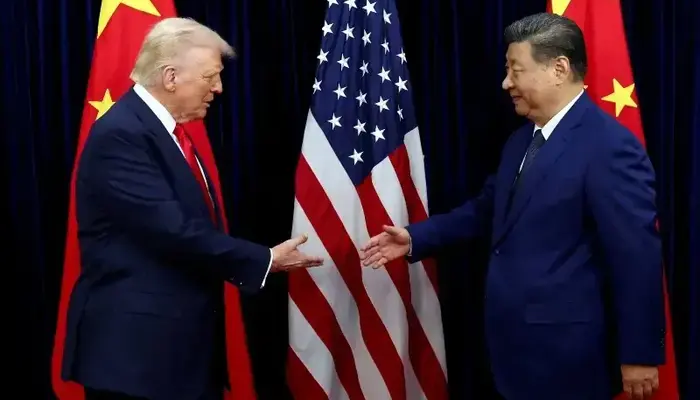
US President Donald Trump is set to arrive in China on Wednesday for a three-day state visit that is expected to focus heavily on trade, economic cooperation and the escalating US-Iran conflict.
The May 13–15 visit marks the first trip by a sitting US president to China in nearly nine years. The high-profile diplomatic engagement comes at a critical time as the world’s two largest economies attempt to stabilise strained relations after months of tariff disputes, geopolitical rivalry and growing instability in the Middle East.
During the visit, Trump is expected to hold one-on-one talks with Chinese President Xi Jinping, attend a state banquet and visit Beijing’s historic Temple of Heaven. However, analysts say the symbolic events surrounding the trip are overshadowed by urgent strategic concerns linked to Iran and the Strait of Hormuz crisis.
Iran Conflict Looms Over US-China Talks
Although trade and investment remain major pillars of the visit, the ongoing conflict involving Iran and regional tensions in the Gulf are expected to dominate closed-door discussions between Washington and Beijing.
The White House described the visit as one of “tremendous symbolic significance,” while indicating that Trump hopes to secure new commercial agreements during his stay.
At the same time, Washington is expected to urge Beijing to use its influence over Tehran to help ease tensions in the Strait of Hormuz, a key global shipping route that carries a major share of the world’s oil supplies. The waterway remains especially important for China, which relies heavily on energy imports passing through the Gulf.
US officials are also expected to push China not to obstruct diplomatic efforts at the United Nations aimed at condemning attacks on commercial shipping in the region.
Read more: Pakistan vs Australia ODI Series Schedule Announced
Business Leaders Join Presidential Delegation
The composition of Trump’s delegation highlights the administration’s renewed focus on economic diplomacy despite mounting geopolitical tensions.
Several prominent American business executives are expected to accompany the president, including Elon Musk of Tesla, Tim Cook of Apple, Larry Fink of BlackRock and Kelly Ortberg of Boeing.
Executives from Citigroup and Qualcomm are also expected to participate in meetings focused on manufacturing, technology cooperation and future investment opportunities.
The visit had initially been planned for March or April but was delayed after tensions in the Middle East intensified.
China Seeks Diplomatic Role in Gulf Crisis
Beijing has increasingly positioned itself as a potential mediator in the regional crisis. Together with Pakistan, China has reportedly backed diplomatic initiatives aimed at securing a ceasefire and restoring safe maritime trade routes through Hormuz.
Chinese and Pakistani officials are said to have advanced a five-point diplomatic framework earlier this year intended to restart negotiations and contain the conflict.
For Beijing, the crisis carries significant economic risks. Rising oil prices have added pressure to China’s slowing economy and increased costs for industries dependent on petrochemicals, including plastics and textiles.
Although China’s large strategic oil reserves and rapid expansion into renewable energy and electric vehicles have helped cushion some of the impact, the prolonged conflict continues to threaten export-driven sectors that remain central to Chinese economic growth.
Abbas Araghchi Visit Signals Beijing’s Growing Influence
Last week’s visit to China by Iranian Foreign Minister Abbas Araghchi appeared to underline Beijing’s growing diplomatic influence in the region ahead of Trump’s arrival.
The United States closely monitored the trip. US Secretary of State Marco Rubio publicly expressed hope that Chinese leaders would pressure Tehran over disruptions in the Strait of Hormuz.
Analysts believe Washington increasingly recognises that any lasting diplomatic breakthrough with Iran may require Chinese cooperation. However, relying on Beijing also creates political risks for Trump at home.
Middle East expert Vali Nasr warned that Trump could face difficult trade-offs during his meetings in Beijing. According to Nasr, asking Xi for help on Iran may be viewed domestically as a sign of weakness and could come at a political cost if China refuses to cooperate.
Nasr also suggested that Chinese officials remain concerned that the United States could escalate military operations after Trump’s visit, potentially damaging Beijing’s relationship with Tehran.
Domestic Pressure Builds on Trump
Trump is also facing growing criticism within the United States over the ongoing conflict.
Senate Democratic leader Chuck Schumer recently accused the president of dragging the country into what he described as an “illegal, costly war without any goals or endgame.”
Schumer announced that Democrats would seek another vote on a War Powers Resolution aimed at withdrawing US involvement from hostilities connected to Iran.
Despite the mounting tensions, both Washington and Beijing appear determined to prevent the Iran crisis from pushing their already fragile relationship into deeper confrontation.
Xi is expected to make a return visit to Washington later this year, signalling that despite strategic rivalry and growing distrust, both powers still view high-level engagement as essential to managing global instability.