
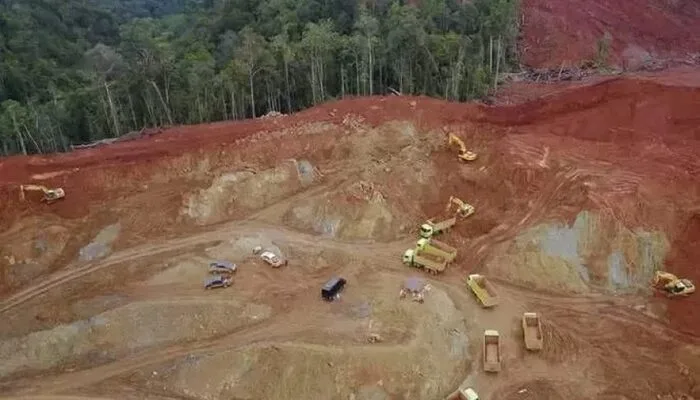
The race for a greener future, fueled by the global demand for electric vehicles (EVs), has turned Indonesia’s rich nickel reserves into a vital resource. However, the cost of mining this critical mineral is devastating for local communities and the environment. The extraction of nickel in Indonesia is causing deforestation, water pollution, and severe disruptions to Indigenous livelihoods, raising serious concerns about sustainability.
Mining’s Toll on Kabaena Island
Kabaena Island in Southeast Sulawesi, with its lush forests and scenic beauty, hides a harsh reality. Beneath its surface lie vast nickel reserves, driving mining operations across much of the island. With licenses covering nearly 75% of Kabaena, mining activities are reshaping its landscape and communities.
Locals like Sahrul, founder of the activist group Sagori, speak of muddy lands and frequent flooding caused by mining. Social tensions between those who support mining for its economic benefits and those who oppose it for its environmental impact are straining familial and community relationships.
Amal, a 25-year-old student, laments the loss of natural resources. “The forests are broken, the river is gone, and water scarcity has become a daily struggle,” he says. For many on the island, mining has disrupted not only their environment but also their way of life.
Impact on the Sea Nomads
The consequences of nickel mining extend beyond the land. A report by the local NGO Satya Bumi highlights severe water contamination in Sulawesi and Halmahera, Indonesia’s primary nickel regions. Polluted rivers and seas have reduced fish stocks and caused health issues such as skin infections in children.
The Bajau people, known as Sea Nomads for their extraordinary diving skills, are among the most affected. Water pollution threatens their traditional livelihoods and centuries-old connection to the sea.
Deforestation and Environmental Damage
Nickel mining has emerged as the leading cause of deforestation in Indonesia’s nickel-rich provinces. Of the 920,000 hectares of mining concessions, two-thirds are covered by forests. Forest loss near nickel-processing plants occurs at twice the rate of other areas, according to Auriga Nusantara, another Indonesian NGO.
Mining-induced deforestation is destroying critical ecosystems and accelerating biodiversity loss, compounding the long-term consequences for both nature and people.
International Demand Drives Destruction
Global demand for nickel, driven by EV production, has intensified since Indonesia banned raw nickel-ore exports in 2020. Investments from countries like China have poured into the sector, leading to over $15 billion in deals for battery materials.
However, European investment remains cautious. Companies like BASF and Eramet have withdrawn from Indonesian projects due to the environmental damage they cause, including threats to Indigenous tribes.
Read: Punjab Traffic Police Intensifies Action Against Smog-Emitting Vehicles
A Call for Change
Civil society groups in Indonesia are advocating for stricter environmental protections, including designating mining-free zones to preserve forests and biodiversity. They are also pushing for Free, Prior, and Informed Consent (FPIC) to protect the rights of Indigenous and local communities.
Tamrin, a father of five in Kabaena, urges EV consumers to consider the consequences. “Electric cars may bring comfort, but they come at a high cost for places like ours. I pray my children will still have a future on this island.”
Sustainable solutions, built on partnerships between Indonesia and global stakeholders, are essential to ensure the benefits of green technology do not come at the expense of human lives and fragile ecosystems.
Follow Day News on Google News, Instagram, YouTube, Facebook, Whats App, and TikTok for latest updates
