Pakistan mango exports are entering the new season under heavy pressure, and the outlook is far from sweet. What should have been a strong commercial opportunity for one of the country’s best-known fruits has turned into a cautionary tale about how geopolitics, inflation and climate stress can hit agriculture at the same time.
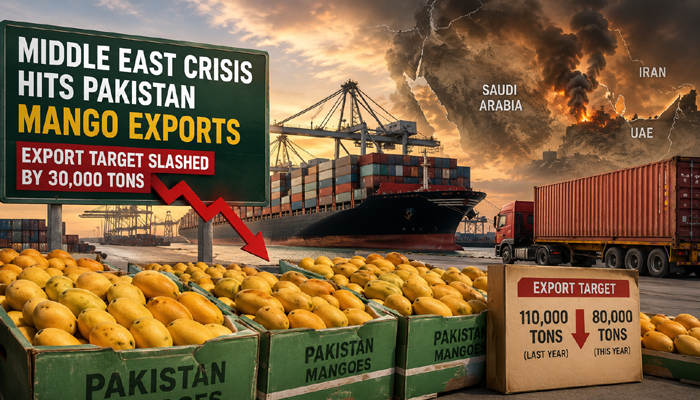
The season begins on June 1, but exporters are already preparing for a difficult year. The export target has been cut to 80,000 tons from 110,000 tons last season, a sharp reduction that reflects the scale of the disruption facing the industry. That is not just a statistical downgrade. It is a warning sign for earnings, growers and supply chains that depend on mango exports as a major seasonal revenue stream.
Read More: Pakistan and Iran Sign Trade Deals to Expand Cooperation
Middle East Tensions Shake the Core Market
The biggest blow is coming from the Middle East crisis. Gulf markets remain central to Pakistan mango exports, accounting for a large share of shipments every year. But rising regional instability has disrupted trade confidence, complicated logistics and driven transport costs to punishing levels.
For exporters, the numbers tell the story clearly. Sea freight to Gulf destinations has surged from about $1,200 to $1,400 per container last season to as high as $6,000 to $7,000 this year. Air freight has also climbed sharply, moving from around 70 to 90 cents per kilogram to nearly $2 per kilogram. These are not minor adjustments. They are cost shocks that can erase margins before a single mango reaches a buyer.
The result is predictable. Even when demand remains intact, high freight charges can make exports commercially unviable. For a perishable product like mangoes, where timing is everything, such price pressure is especially damaging.
Exporters Face Squeezed Margins
Pakistan mango exports are also being squeezed by rising fuel prices inside the country. From orchards to packing facilities and ports, every movement now costs more. That means exporters are paying more at every step while facing weaker returns in local currency terms.
A relatively stronger rupee has added another layer of difficulty. On paper, it may sound positive for the economy, but for exporters it can reduce earnings after conversion and make an already tight business model even harder to sustain. In a sector where profit depends on speed, quality and volume, the margin pressure is becoming severe.
Industry estimates suggest export revenue could fall from about $110 million last season to somewhere between $75 million and $80 million this year. That drop would be felt far beyond the export community. It would affect growers, packers, transporters and everyone tied to the mango supply chain.
Climate Stress Is Weakening the Crop
The problems are not only external. Pakistan mango exports are also being hurt by structural weakness at home. Climate change, erratic weather and disease pressure have taken a steady toll on orchards over the past several years.
This year’s crop is expected to be about 20 percent below the country’s average annual production of 1.9 million tons. Lower yield means less fruit available for export, and lower availability usually means tighter competition among buyers, higher handling pressure and more uncertainty for exporters.
That is why the current crisis should not be viewed as a one-season setback. It is increasingly a long-term business risk.
Government Timing Helped Preserve Quality
One positive decision has stood out. By holding the export season until June 1, the government resisted pressure to open earlier. That decision matters because properly matured fruit offers better taste, aroma and quality, which strengthens Pakistan’s reputation in global markets.
For a premium product like mangoes, quality is not a slogan. It is the brand. Premature harvesting could have damaged the country’s image and weakened buyer trust.
What Pakistan Must Do Next
Pakistan mango exports still have real potential, but the sector needs urgent support. Exporters are calling for investment in research, better orchard management, stronger disease resistance and improved technical guidance for growers. There is also an immediate need for freight facilitation, port clearance support and diplomatic engagement to keep Gulf buyers connected despite regional turmoil.
The message is blunt. Without coordinated action, even the reduced target of 80,000 tons may be difficult to reach. That would mean lower foreign exchange earnings and a smaller share in a market Pakistan can still dominate with the right support.
Pakistan’s mango industry remains one of the country’s most valuable horticultural assets. But this season shows how quickly opportunity can turn fragile when global conflict, rising costs and agricultural weakness collide.
For More Details visit Daily Dawn Story
-

-

-

-