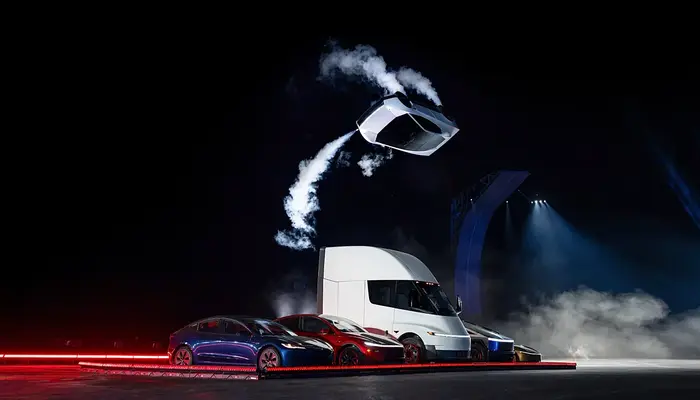
Tesla has unveiled its long-awaited next-generation Roadster with a dramatic demonstration featuring mid-air manoeuvres, upside-down driving and extraordinary acceleration claims. However, while the electric sports car has captured attention with its futuristic technology, automotive experts have raised questions about its practicality, production timeline and the feasibility of bringing its most ambitious features to public roads.
The demonstration took place on October 15, 2026, at a SpaceX facility in Texas, where Tesla chief executive Elon Musk presented the redesigned Roadster after years of delays. The vehicle used a combination of specialised suction technology and SpaceX-inspired thrusters to perform stunts that went far beyond a conventional electric car launch.
Tesla says production is expected to begin in 2028. Yet, the event has left potential buyers and industry observers with a key question: can the company turn its extraordinary demonstration into a practical, production-ready sports car?
Tesla Roadster Demonstration Showcases SpaceX-Inspired Technology
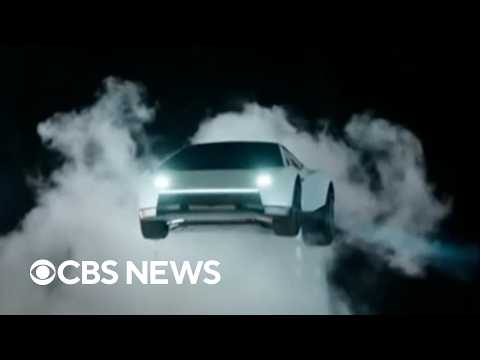
The most striking moment came when the Roadster prototype performed a mid-air flip before returning to the ground. The demonstration also showed the car travelling upside down on a specially prepared ramp and jumping over other Tesla vehicles.
Pakistan Has Enough Energy Supplies Until November, Aurangzeb Warns of Gulf Risks
Tesla’s presentation attributed these capabilities to a combination of suction-generating fans and cold-gas thrusters developed with SpaceX technology. The thrusters use compressed gas to produce short bursts of force, allowing the specially equipped prototype to perform brief aerial manoeuvres.
The company also claimed the vehicle could accelerate from zero to 60 miles per hour in approximately 0.81 seconds in its most extreme configuration. Tesla has cited a top speed exceeding 230 mph, although these performance claims still require independent verification.
Despite the dramatic visuals, the demonstration does not mean the Roadster can fly like an aircraft. The displayed manoeuvres involved specialised equipment and controlled conditions. Tesla has yet to establish that the same capabilities will be available in a road-legal production model.
What Do Automotive Experts Say About the New Tesla Roadster?
Reviews from automotive journalists reveal a mixture of excitement about the engineering and caution about the promises.
Steven Ewing, director of editorial content at Edmunds, described the Roadster’s styling positively but said the performance claims should be treated with considerable scepticism until the company provides further evidence. His assessment reflects a central challenge for Tesla: demonstrating a remarkable prototype is different from proving that a finished car can deliver the same performance reliably.
Iran Urges UN Security Council to Act Against Israel Over Regional Tensions
MotorTrend also examined the vehicle before its public reveal, reporting that its journalists received access to the Thrust variant and spoke with Tesla design and engineering executives. The publication’s first-look report explored the car’s design and proposed technology, while noting that some specifications had not been confirmed for the base model.
Meanwhile, The Verge characterised the flying demonstration as a spectacle with limited practical relevance. Its reporting highlighted concerns over passenger space, the specialised equipment required for the Rocket version and the absence of clear information about some basic production specifications.
These assessments point to a distinction between the Roadster’s technological ambition and its readiness for everyday use. The demonstration has shown what Tesla wants the vehicle to achieve, but independent performance tests and a production model will be needed to establish what buyers can actually expect.
Tesla Roadster Production Delayed Until 2028
The Roadster project has a long history. Tesla first introduced the next-generation model in 2017 and initially expected production much earlier. Repeated delays have left customers waiting for a vehicle that has remained largely out of reach.
Musk has now identified 2028 as the expected production start. However, that remains a target rather than a completed manufacturing milestone.
Reuters reported that the Roadster is unlikely to make a major direct financial contribution to Tesla compared with its larger business operations. Instead, the vehicle serves as a flagship product intended to showcase the company’s engineering capabilities and strengthen its brand image.
That role could explain why Tesla has focused on spectacular demonstrations. The Roadster attracts attention in a way that an ordinary product update may not, but the company will ultimately need to deliver a finished vehicle to turn that attention into customer satisfaction.
Safety and Road-Legal Questions Remain
The Roadster’s specialised propulsion system raises questions about how the most extreme versions could operate outside controlled test environments.
A production vehicle must meet relevant safety and regulatory requirements. Systems that generate substantial thrust or allow a car to leave the ground would require careful assessment before regulators could approve their use on public roads.
The Rocket version shown during the demonstration is not a conventional road-going configuration, and its availability is expected to be restricted. The standard road-oriented model may not include all the features showcased in the aerial stunts.
Tesla has also yet to demonstrate publicly that the most ambitious performance claims can be repeated under independent testing conditions. Buyers will need confirmed specifications for range, charging, braking, handling and safety before they can make a meaningful comparison with other high-performance electric vehicles.
Will Tesla Roadster Change the Electric Car Market?
The new Roadster is designed to occupy the high-performance end of the electric vehicle market. Its proposed acceleration, futuristic styling and SpaceX-inspired technology distinguish it from conventional electric sports cars.
However, its broader commercial impact remains uncertain. A limited-production supercar will appeal to a different group of buyers from Tesla’s mass-market vehicles, and the specialised Rocket configuration may have little relevance to everyday drivers.
The Roadster could nevertheless serve as a technology showcase, demonstrating Tesla’s ambitions in electric propulsion, vehicle control and high-performance engineering.
For potential customers, the more practical questions remain unanswered: how much will the finished vehicle cost, what range will it offer, which features will be included in each version, and when will deliveries actually begin?
Tesla Roadster Faces Its Biggest Test Ahead
Tesla’s latest Roadster demonstration has delivered striking images and ambitious performance claims, but the next phase will require more than an impressive show.
The company must translate its prototype technology into a reliable, safe and commercially available vehicle while meeting the expectations it has set for customers. Independent testing will be essential to establish whether the advertised acceleration, top speed and specialised manoeuvres match real-world performance.
-
-
-

-