
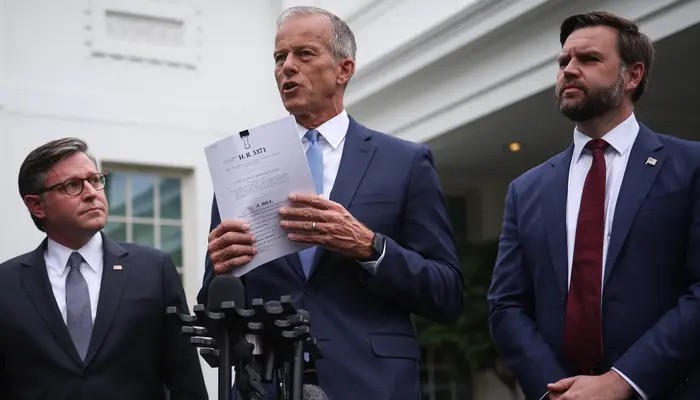
The United States entered a government shutdown at midnight after President Donald Trump and Congress failed to strike a funding deal. Lawmakers clashed over health care subsidies, leaving federal agencies scrambling to adjust while millions of Americans face uncertainty.
Midnight Deadline Passes Without Agreement
Negotiations collapsed as Democrats and Republicans remained divided over enhanced subsidies for Obamacare. Both parties insisted they would not accept blame for the stalemate. With no resolution in sight, funding lapsed and nonessential government services began shutting down.
The White House budget office had already warned agencies to prepare contingency plans. Many employees now face furloughs while critical departments continue limited operations.
Essential Services Remain Operational
Not all government activity will stop. Essential functions that protect lives and property will remain active. Federal agencies detailed which services continue and which halt.
The Department of Homeland Security announced that most of its personnel will stay on the job. Transportation Security Administration officers, border patrol agents, and air traffic controllers will continue their duties. However, many employees in noncritical roles will be furloughed.
By contrast, the Department of Education stated that most of its staff will be sent home during the shutdown. Processing of grants, loan programs, and administrative work will slow dramatically.
Furloughs and Financial Anxiety
Thousands of federal workers face sudden uncertainty. Agencies have distributed furlough notices, instructing employees to stop working until Congress passes new funding. While some may eventually receive back pay, the timing remains unclear.
Families dependent on federal salaries now confront financial strain. Union leaders expressed frustration, warning that many workers cannot afford weeks without pay. The Office of Personnel Management urged agencies to provide clear communication to reduce confusion among employees.
Political Blame Game Escalates
As the shutdown began, political leaders launched fierce accusations. Democrats blamed Republicans for refusing to negotiate on health care funding. Republicans argued that Democrats blocked reasonable proposals to secure political leverage.
House Speaker Mike Johnson criticized Democratic leaders for holding government services “hostage” to protect Obamacare subsidies. He said Republicans were prepared to compromise but would not accept “unlimited spending.”
Democrats countered that Republicans were the ones endangering health care access. They accused the GOP of demanding deep cuts that would hurt working families.
Read: Israel Kills 45 in Gaza as Hamas Reviews Trump’s Peace Plan
Schumer Defends Past Remarks
Senate Minority Leader Chuck Schumer faced renewed scrutiny for his past comments opposing shutdowns. During Trump’s first term, he called shutting down the government over policy disputes “self-defeating.”
Speaking with CNN, Schumer defended his stance. He argued that circumstances had changed. In past negotiations, he said, Republicans and Democrats met repeatedly and found compromises that kept government open. This time, he insisted, Republicans refused to negotiate in good faith.
Schumer pointed to health care as the sticking point. He said Republican proposals would damage coverage for millions of Americans. “When I was majority leader, we had 13 times to vote on a budget. You know why there was no shutdown? We sat and negotiated. They got some things, we got some things,” he said.
White House Reaction
The Trump administration criticized Democrats for forcing a crisis. Officials accused them of prioritizing political fights over public service. The White House press secretary said the president remained ready to negotiate but would not “abandon commitments to fiscal responsibility.”
Behind closed doors, aides admitted uncertainty over how long the shutdown might last. Some predicted that both parties could take days to reassess their positions. Others warned the impasse could stretch far longer if neither side shifted.
Impact Across the Country
Beyond Washington, the shutdown’s effects are already spreading. National parks may close or operate with reduced services. Passport and visa processing will slow. Research projects funded through federal grants face suspension.
Travelers may experience delays despite essential airport staff remaining on duty. Farmers awaiting loans or subsidies from federal programs could also face setbacks. Communities dependent on federal contracts may encounter sudden disruptions.
Anxiety Over Duration
Uncertainty surrounds the length of the shutdown. Some lawmakers predict a short disruption as public pressure builds. Others warn that hardened positions could prolong the crisis.
The White House budget office told agencies to prepare for “mass firings” if the standoff persists. Analysts note that prolonged shutdowns strain the economy, shake public confidence, and damage America’s global reputation.
Public Voices Emerging
Citizens have begun sharing stories of how the shutdown affects their lives. Federal employees describe worry about missed mortgage payments. Students fear delays in financial aid. Small business owners warn that contracts with federal agencies may stall.
Advocacy groups are urging Congress to act swiftly, stressing that ordinary Americans bear the heaviest burden.
A Nation on Hold
For now, the United States waits. Critical services continue, but millions feel the weight of uncertainty. Lawmakers remain locked in blame while workers and families brace for the unknown.
The shutdown underscores deep divisions in Washington. Without compromise, the government remains paralyzed, and the nation’s future hinges on whether leaders can break the deadlock.
Follow us on Instagram, YouTube, Facebook,, X and TikTok for latest updates
