Lapid, Olmert Slam Netanyahu’s Gaza Plan as ‘Concentration Camp’
Lapid and Olmert condemn proposed mass internment site amid rising death toll and Rafah demolitions

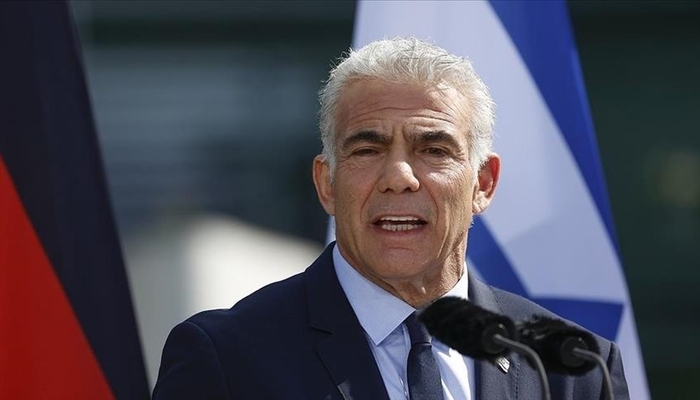
Two former Israeli prime ministers have condemned Benjamin Netanyahu’s plan to build a so-called “humanitarian city” in southern Gaza, warning it could effectively become a “concentration camp” for Palestinians.
On Sunday, Yair Lapid and Ehud Olmert both spoke out as Israel’s bombardment of Gaza intensified, killing at least 95 Palestinians in just one day.
Lapid, who leads Israel’s largest opposition party, told Israeli Army Radio that “nothing good” would come from the controversial initiative. “It’s a bad idea from every possible perspective – security, political, economic, logistical,” he said.
He further added, “I don’t prefer to describe a humanitarian city as a concentration camp, but if exiting it is prohibited, then it is a concentration camp.”
What Is the “Humanitarian City”?
According to Netanyahu’s government, the proposed “humanitarian city” will be built in southern Gaza to relocate more than 600,000 displaced Palestinians now cramped into the al-Mawasi coastal zone. Eventually, the plan envisions relocating over two million Palestinians—Gaza’s entire population—into this single area.
Critics say the plan is not humanitarian at all, but rather a large-scale internment project designed to forcibly remove civilians from the rest of Gaza and place them under tight Israeli control.
Lapid served briefly as prime minister in 2022 and now leads the centrist Yesh Atid party. His strong rejection of the plan signals growing unease even within Israeli political circles over the direction of the Gaza war.
Olmert Joins Chorus of Concern
Former Prime Minister Ehud Olmert, who led the country during the 2006 Lebanon war, echoed Lapid’s concerns. While he stopped short of using the term “concentration camp,” Olmert questioned the morality and viability of the plan.
“There is no such thing as a humanitarian city surrounded by rubble and checkpoints,” he reportedly said in closed-door comments, according to Israeli media. “This is not resettlement—it’s imprisonment.”
Olmert, like Lapid, warned the international community would not accept such a move. “If we are seen creating permanent displacement zones in Gaza, we risk losing every last thread of legitimacy we have left in this war,” he said.
Rafah in Ruins as Demolitions Surge
The criticism from Israeli leaders comes amid surging demolition activity in Rafah, where Israeli forces have accelerated the destruction of homes and infrastructure over recent months.
According to satellite imagery reviewed by independent analysts, the number of destroyed buildings in Rafah rose from 15,800 on April 4 to 28,600 by July 4. That’s a nearly 81% increase in just three months.
The Israeli military claims these demolitions target Hamas infrastructure and tunnel networks, but human rights groups say civilians bear the brunt.
On the ground, survivors describe entire neighbourhoods flattened and families forced to flee repeatedly. Many are now sheltering in improvised tents or makeshift camps in sweltering heat, with little access to clean water or medical aid.
International and Domestic Pressure Mounts
International backlash is growing. Aid agencies and UN bodies have warned that forcibly relocating civilians into confined, militarised zones may violate international law, including the Fourth Geneva Convention.
Yet, Netanyahu’s administration has so far brushed off the criticism, framing the plan as a way to protect civilians during Israel’s ongoing military campaign in Gaza.
The statements from Lapid and Olmert, however, indicate that even within Israel, the plan may be politically unsustainable. Public opinion in Israel remains divided over the long-term strategy in Gaza, especially as the war drags on with no clear end in sight.
Meanwhile, the humanitarian crisis continues to deepen. With no functioning state infrastructure, rising civilian casualties, and growing international condemnation, Netanyahu’s “humanitarian city” may soon become a symbol not of aid—but of Gaza’s ongoing siege.
Follow us on Instagram, YouTube, Facebook,, X and TikTok for latest updates