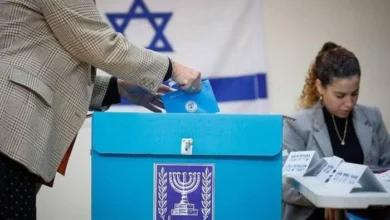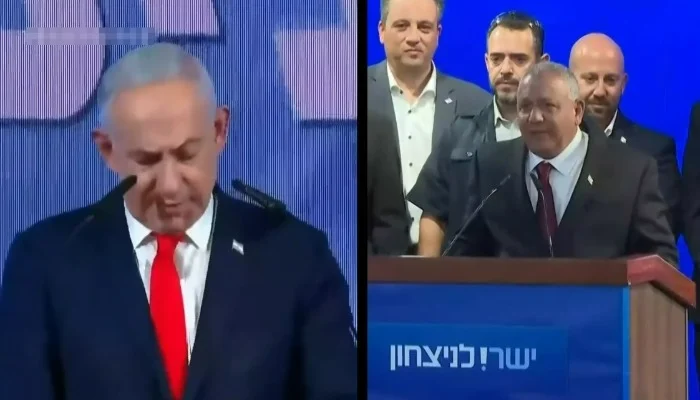
Arab-led parties have emerged as potential kingmakers in Israel’s election, putting them in a pivotal position as rival political blocs struggle to secure a parliamentary majority. The Joint List and Ra’am were projected to win a combined 19 seats, while Prime Minister Benjamin Netanyahu’s bloc led with 53 seats, eight short of the 61 needed to form a government.
With nearly 90% of votes counted in the reported preliminary tally, the election has left Israel facing another uncertain period of coalition negotiations. Neither Netanyahu’s bloc nor the opposition led by former military chief Gadi Eisenkot appeared to have enough seats to govern independently.
The projected gains by Arab-led parties could influence the next government’s formation, although political disagreements may complicate efforts to secure their support.
Netanyahu Leads but Cannot Secure a Majority
Netanyahu’s Likud-led bloc emerged as the leading political camp in the preliminary results, with 53 projected seats in the 120-member Knesset. However, the result leaves the prime minister short of the majority required to form a government without additional partners.
Netanyahu must now seek support from other political factions to strengthen his position. Negotiations could prove challenging because potential partners have different priorities on security, religious affairs, military service and other domestic issues.

Read more: Iran Sends Strong Message to US as Pezeshkian Meets Putin
Although his bloc leads the preliminary count, the outcome does not guarantee that Netanyahu will remain in power after coalition negotiations conclude.
Eisenkot’s Opposition Faces Its Own Challenge
The opposition bloc led by Gadi Eisenkot was projected to secure 48 seats, leaving it 13 short of a parliamentary majority.
The result gives the opposition an opportunity to challenge Netanyahu, but assembling a coalition could prove difficult. Opposition parties would need to bridge political differences and secure support from additional factions to reach the 61-seat threshold.
Arab-led parties could become important to that effort. However, disagreements over cooperation with Arab representatives could limit the opposition’s ability to turn its combined parliamentary strength into a governing majority.
Arab-Led Parties Could Decide Israel’s Political Future
The projected 19 seats for the Joint List and Ra’am could give Arab-led parties significant leverage during coalition negotiations.
Their support could help an opposition-led coalition reach a majority if enough other parties agree to cooperate. This could place Arab political representatives in a stronger position to influence negotiations over government priorities and policy commitments.
However, the two parties have distinct political positions, and their combined projected seats do not automatically translate into a unified commitment to support Eisenkot or another candidate.
Whether they support a coalition, remain outside the government or pursue other parliamentary arrangements could prove crucial to the next stage of Israel’s political process.
Outstanding Votes Could Affect Final Seat Count
The parliamentary balance remains provisional until the official results are confirmed. Outstanding special ballots, including votes cast by eligible soldiers and diplomats, could change the final distribution of seats.
Even a limited change could affect coalition calculations in an election where neither major bloc has secured a projected majority.
Political leaders will need to assess the final results before determining whether they can assemble a stable government or must consider alternative arrangements.
What Happens Next in Israel?
Israel’s next government will depend on which political leader can secure sufficient support in the Knesset. Netanyahu’s bloc has the largest projected share, but the opposition could still explore alliances to challenge his leadership.
Arab-led parties may hold the balance of power, but their influence will depend on the willingness of other political factions to negotiate with them.
If no candidate can secure a majority, Israel could face prolonged political uncertainty and the possibility of another election. Until a new government takes office, Netanyahu remains caretaker prime minister.
The central question is no longer simply who won the most seats, but who can build a coalition capable of governing Israel.