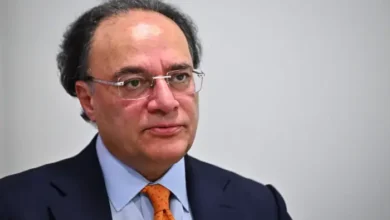
Imran Khan Toshakhana case verdict has emerged as a defining development in Pakistan’s political, legal, and governance discourse, with far-reaching implications for accountability, investor sentiment, and institutional credibility. In a landmark ruling, a special court sentenced Pakistan Tehreek-e-Insaf (PTI) founder and former prime minister Imran Khan and his wife Bushra Bibi to 17 years’ imprisonment each in the Toshakhana-2 reference.
The verdict, delivered by Special Judge Central Shahrukh Arjumand during proceedings held at Rawalpindi’s Adiala Jail, represents one of the most consequential accountability rulings involving a former head of government.
Background of the Imran Khan Toshakhana Case Verdict
The Toshakhana-2 case centers on the alleged undervaluation and personal retention of a luxury Bulgari jewellery set, gifted to Imran Khan by the Saudi Crown Prince during an official visit in May 2021.
According to the prosecution:
- The jewellery set was valued at approximately Rs80 million
- It was allegedly purchased for only 9 million
- The gift was not deposited according to Toshakhana rules
The court concluded that the actions constituted criminal breach of trust, misuse of authority, and corruption under Pakistani law, forming the basis of the Imran Khan Toshakhana case verdict.
Legal Framework Behind the Toshakhana Case Verdict
Under the ruling:
- 10 years rigorous imprisonment was awarded under
- Section 34 (common intention)
- Section 409 (criminal breach of trust), Pakistan Penal Code
- 7 years imprisonment under
- Section 5(2), Prevention of Corruption Act
Both Imran Khan and Bushra Bibi were also fined Rs16.4 million each, with additional jail time applicable in case of non-payment.
The court cited Section 382-B of the Criminal Procedure Code, allowing the period already spent in custody to be counted toward the sentence.
Imran Khan’s Existing Convictions and Consecutive Sentencing
The Imran Khan Toshakhana case verdict will take effect after completion of his sentence in the £190 million corruption case, according to Information Minister Attaullah Tarar.
Imran Khan:
- Has been incarcerated since August 2023
- Is serving a 14-year sentence in the £190 million reference
- Faces additional trials under the Anti-Terrorism Act related to May 9 protests
Bushra Bibi is also serving a seven-year sentence in the same corruption case.
PTI’s Response to the Toshakhana Case Verdict
The Pakistan Tehreek-e-Insaf strongly rejected the ruling, describing the Imran Khan Toshakhana case verdict as:
- Politically motivated
- Constitutionally flawed
- A violation of due process
In official statements and posts on X (formerly Twitter), PTI alleged:
- Lawyers were not present during verdict announcement
- Family members were barred from court proceedings
- The trial lacked transparency
PTI leadership termed the proceedings a “kangaroo court” and claimed the verdict violated the constitutional protection against double jeopardy.
Read More: PTI MNAs Defy Imran Khan’s Directive on NA Committees
Political and Governance Implications
From a business and governance perspective, the Imran Khan Toshakhana case verdict carries broader implications:
Rule of Law and Accountability
Government officials argue the ruling reinforces:
- Legal accountability
- Protection of state assets
- Enforcement of anti-corruption laws
Political Stability
Opposition leaders warn the verdict may:
- Intensify political polarization
- Prolong instability
- Affect democratic credibility
Investor Confidence
Political uncertainty and prolonged legal battles can:
- Impact foreign investor sentiment
- Delay economic decision-making
- Influence Pakistan’s reform trajectory
Government’s Position on the Toshakhana Verdict
Senior government officials defended the ruling as:
- Constitutionally sound
- Based on documented evidence
- Free of political bias
Barrister Aqeel Malik, Minister of State for Law and Justice, stated the verdict followed a 15–16 month trial and proved significant harm to the national exchequer.
Bilal Azhar Kayani, Minister of State for Finance, added that Toshakhana rules were clearly violated and that the case mirrored earlier Toshakhana-I findings.
Why Toshakhana Cases Matter for Governance Reform
The Imran Khan Toshakhana case verdict has renewed focus on:
- Transparency in acceptance of state gifts
- Asset disclosure by public office holders
- Institutional oversight
For Pakistan’s reform agenda, enforcement of Toshakhana laws is increasingly viewed as essential for restoring public trust and strengthening governance frameworks.
- Supreme Court of Pakistan – Legal Framework
https://www.supremecourt.gov.pk - National Accountability Bureau (NAB)
https://nab.gov.pk
-
-

-

-