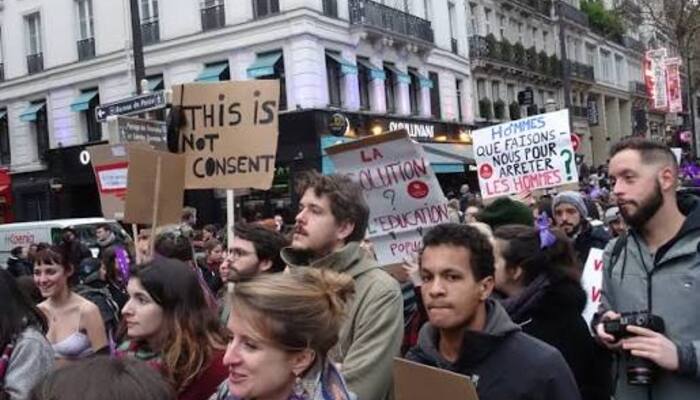
Paris shop looting left businesses damaged, storefronts smashed and streets covered in debris after demonstrations against rising living costs and poor conditions in schools turned violent on Saturday, October 17. The area around Place de la République became one of the worst-affected locations in the French capital, with supermarkets, pharmacies, clothing stores and other businesses targeted.
The destruction continued into the evening as police attempted to control groups of masked individuals involved in vandalism and theft. Shop owners faced the immediate challenge of securing their premises, assessing losses and protecting whatever remained inside their businesses.
Read more: Norte Fire Burns Homes in California, Forces 16,000 Residents to Evacuate
The violence came during nationwide demonstrations that attracted hundreds of thousands of people. Although many demonstrators gathered to express concerns about living costs and public services, incidents of looting, fires and clashes with law enforcement overshadowed the peaceful protests in several locations.
Small Businesses Bear the Brunt of Paris Shop Looting
The damage around Boulevard Magenta highlighted the impact of the unrest on local business owners. A hair salon that had operated in the area for 12 years suffered extensive destruction after attackers broke through its storefront. The premises were left with broken mirrors, overturned furniture and scattered magazines, while essential business equipment and cash were reportedly stolen.
The owners were left trying to secure the damaged entrance with adhesive tape and other makeshift materials. Their experience illustrated the difficulties faced by small businesses caught up in violence unrelated to their daily operations.
Nearby, the Franprix supermarket on Rue Beaurepaire was also targeted. Its metal shutter was damaged, and goods were either stolen or left crushed across the shop floor. Workers were called in to install wooden boards over the damaged frontage and prevent further access.
A nearby pharmacy suffered similar destruction, losing its windows, cash register and computer equipment. The incidents disrupted ordinary commercial activity and left businesses facing repair costs, inventory losses and uncertainty about reopening.
These scenes formed part of a broader pattern of property damage reported around Place de la République and other shopping areas in central Paris.
Read more: Tesla Roadster Makes Dramatic Debut With Flying Stunt, but Experts Raise Questions
Police Use Tear Gas as Violence Spreads
French police deployed tear gas and water cannons during clashes with people wearing hoods and masks near Place de la République. Officers faced projectiles, including fireworks and paving stones, while fires involving vehicles and rubbish bins added to the disorder.
The Associated Press reported that approximately 400 people had been arrested nationwide during the initial demonstrations, according to Interior Minister Laurent Nuñez. Authorities estimated that around 550,000 people attended 110 marches, while protest organisers put the national turnout at approximately 800,000.
The figures reflected the scale of the demonstrations, which took place in Paris and other French cities. Authorities also reported incidents involving damaged public buildings and businesses beyond the capital.
President Emmanuel Macron condemned the destruction and said those responsible for looting and attacks on public property would face accountability. The government distinguished between people’s right to demonstrate peacefully and acts of violence committed during the gatherings.
Protests Driven by Living Costs and School Conditions
The demonstrations were fuelled by dissatisfaction with rising household expenses, pressure on public services and concerns about conditions in schools.
Student organisations had been protesting school-related grievances for weeks, while labour unions supported broader demands for improved wages, pensions and public services. Some participants also sought to revive the spirit of France’s Yellow Vest movement, which emerged in 2018 amid anger over social inequality and economic pressures.
The protests brought together people with different concerns and political positions. However, violence by some groups created a difficult distinction between peaceful demonstrators and individuals involved in vandalism and theft.
The unrest was not limited to Paris. The Associated Press reported damage in Marseille, an incident involving a fire at a tourist office in Lyon and a blaze at the historic city hall in Limoges. Other cities also experienced clashes or attacks on public buildings.
These incidents demonstrated how the demonstrations developed into a wider public-order challenge across France.
Paris Faces a Difficult Cleanup and Recovery
By Sunday, October 18, municipal cleaning crews were working to remove broken glass, rubbish and other debris from streets around Place de la République. Damaged shopfronts required temporary coverings, while the destruction left business owners assessing the financial consequences.
For many shopkeepers, the immediate priority was to prevent additional losses. Securing entrances and arranging repairs became urgent tasks, particularly for businesses whose doors, shutters or windows had been broken.
The damage also raised concerns about the safety of employees, residents and customers in affected neighbourhoods. Some shops could not operate normally while their premises remained damaged or vulnerable to further theft.
Paris Mayor Emmanuel Grégoire visited affected businesses on Sunday and criticised security failures surrounding the violence. According to reporting by Le Monde, shopkeepers described incidents of looting that sometimes continued for extended periods, prompting questions about the police response and the protection available to businesses.
French Government Faces Pressure to Restore Order
The October 17 unrest has intensified debate over public security, the handling of demonstrations and the government’s response to economic and social grievances.
Macron said those responsible for destruction would be held accountable, while Interior Minister Nuñez condemned the violence. Meanwhile, the scale of the damage prompted calls from major city leaders for discussions with the government.
Authorities now face the challenge of investigating offences, identifying those responsible and preventing further attacks while protecting the right to peaceful assembly.
The Paris shop looting also highlights the wider economic consequences of street violence. Independent retailers and local businesses can suffer substantial losses when demonstrations turn destructive, even when they have no connection to the issues driving the protests.
As cleanup operations continue, affected shop owners must contend with damaged premises, missing stock and the cost of restoring their businesses. The episode has left central Paris confronting both the physical aftermath of the unrest and difficult questions about how to protect public spaces, local commerce and peaceful protest.
For France, the priority is to address public concerns without allowing violence and looting to undermine the rights and livelihoods of ordinary citizens.
-
-

-

-