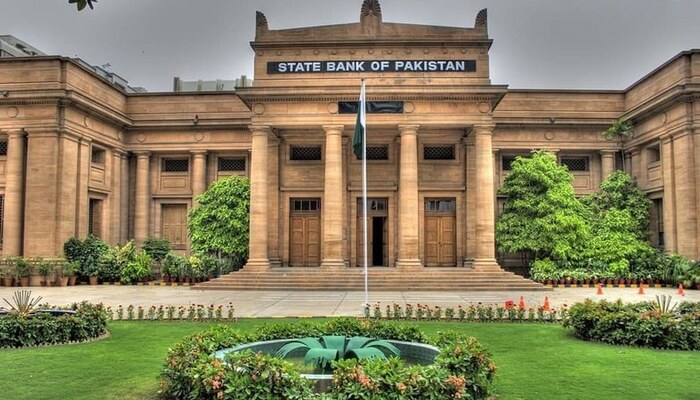
Pakistan’s inflation is expected to gradually decline towards the State Bank of Pakistan’s (SBP) medium-term target of 5-7 per cent during the financial year 2026-27, although global energy price pressures could pose challenges to the country’s economic outlook.
In its Annual Report on the State of Pakistan’s Economy for FY26, released on Monday, the central bank projected real gross domestic product (GDP) growth of 3.5-4.5 per cent in FY27. It also forecast the current account deficit at 0-1 per cent of GDP and the fiscal deficit at 3-4 per cent.
The report said Pakistan entered the new financial year with improved macroeconomic indicators after demonstrating resilience against domestic and international economic shocks during FY26.
According to the SBP, prudent monetary policy, fiscal consolidation and economic reforms under the International Monetary Fund (IMF) programme helped maintain macroeconomic stability despite challenges such as changing US trade tariff policies, monsoon floods and the Middle East conflict.
Pakistan’s Economic Growth Improved in FY26
The central bank reported an improvement in real GDP growth during FY26, supported mainly by a recovery in large-scale manufacturing.
The rebound in economic activity increased domestic demand and imports, while unfavourable global economic conditions limited export growth.
However, strong workers’ remittances helped contain the current account deficit at 0.1 per cent of GDP during the outgoing fiscal year.
The SBP also attributed the improvement in foreign exchange reserves to its purchases of foreign currency, a reduction in forward liabilities and continued official financial inflows.
Fiscal performance also improved as the government continued its consolidation efforts and benefited from a substantial decline in interest payments.
The central bank said average national consumer price inflation remained close to the upper limit of its 5-7 per cent medium-term target range during FY26. However, an energy price shock pushed year-on-year inflation into double digits from April 2026.
SBP Highlights Challenges to Employment Generation
Despite improvements in economic indicators, the report warned that Pakistan needed deep-rooted structural reforms to achieve sustainable economic growth and create employment for its expanding working-age population.
A dedicated chapter titled Structural Challenges to Job Creation in Pakistan identified weak and unstable economic growth, slow structural transformation and signs of premature deindustrialisation as major barriers to employment generation.
The report also highlighted low female labour force participation, high youth unemployment and widespread informal employment as significant challenges.
It warned that technological developments, the transition towards greener economies and growing geoeconomic fragmentation could create additional pressures on Pakistan’s labour market.
The SBP called for measures to encourage private sector investment, address infrastructure shortages and improve technology and skills development.
It also recommended rationalising taxes, simplifying tax administration and reducing economic policy uncertainty through predictable fiscal and regulatory frameworks.
GDP Growth Forecast at 3.5-4.5% in FY27
The central bank expects Pakistan’s economic activity to strengthen gradually during FY27, supported by recovering domestic demand and recent fiscal measures.
It noted that improvements in economic indicators had also contributed to upgrades in the country’s sovereign credit ratings.
However, the agricultural outlook faces risks from worsening El Niño conditions, which could affect weather patterns and crop production.
Preliminary information cited in the report indicated improved production prospects for major Kharif crops, including sugarcane, rice and maize, compared with the previous year.
The SBP expects economic expansion, tariff rationalisation and higher international commodity prices to increase imports during FY27.
Meanwhile, exports are projected to recover moderately, supported by policy incentives and a slight improvement in global demand.
Remittances Expected to Support Foreign Exchange Reserves
Workers’ remittances are expected to continue supporting Pakistan’s external account during FY27.
The SBP projected that sustained remittance growth would help keep the current account deficit within 0-1 per cent of GDP.
Foreign exchange purchases, official financial inflows and funds raised through the issuance of $3 billion in Eurobonds in September 2026 are also expected to strengthen the country’s reserves.
The central bank anticipates that these inflows will support further reserve accumulation towards the equivalent of four months of import cover.
Read more: Imran Khan Seeks Urgent Medical Treatment for Himself and Bushra Bibi in Letter to Top Judges
Global Energy Prices Could Affect Inflation Outlook
Despite expectations for lower inflation, the SBP warned that the global energy price shock could continue putting upward pressure on domestic prices.
Higher energy costs could affect transportation, production and other economic activities, potentially slowing the decline in consumer prices.
Nevertheless, the central bank expects inflation to gradually move towards its medium-term target range of 5-7 per cent during FY27.
The report emphasised that maintaining macroeconomic stability would require continued policy discipline and structural reforms.
It also stressed that Pakistan needs a stronger investment environment, improved productivity, better employment opportunities and a more competitive industrial sector to achieve sustainable economic growth.
The SBP’s projections suggest a gradual improvement in Pakistan’s economic outlook, although the pace of recovery will depend on domestic reforms, agricultural performance, external financing and developments in international energy markets.