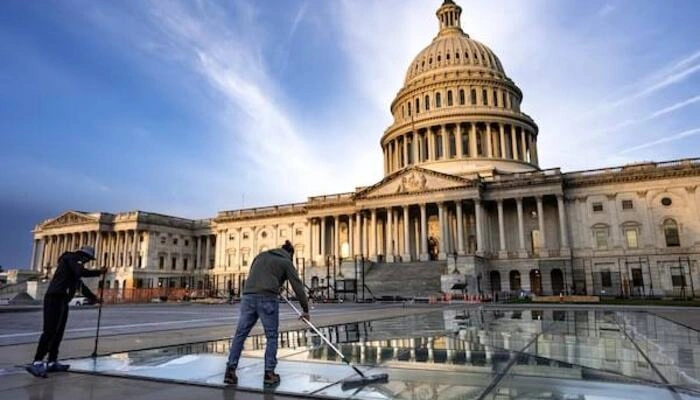
The US Midterm Elections are underway as millions of Americans vote in a crucial contest that could shift the balance of power in Washington. The results will determine whether Democrats can regain control of Congress, challenge President Donald Trump’s legislative agenda and limit his influence over the federal government during the remainder of his second term.
The November 3 midterm elections will decide all 435 seats in the House of Representatives, 35 Senate seats and governorships across 36 states. Democrats are seeking to regain control of both congressional chambers, potentially limiting Trump’s legislative agenda and increasing scrutiny of his administration.
The election has become a major test of public confidence in the president, with rising living costs, inflation, tariffs and the conflict involving Iran contributing to growing political tensions.
A Republican defeat in the House would give Democrats the power to block or delay legislation, investigate administration officials and exercise greater oversight of the White House. Losing the Senate would also complicate Trump’s efforts to secure confirmation for senior government appointments and federal judicial nominees.
Democrats need a net gain of three seats to control the House and four seats to secure a Senate majority under the current party alignment.
Economic Pressure Becomes Major Election Issue
Economic dissatisfaction has emerged as a central issue in the campaign, particularly as American households continue to face pressure from inflation, fuel prices and the cost of everyday necessities.
Trump returned to the White House last year promising to improve affordability and strengthen the economy. However, rising expenses and uncertainty surrounding international developments have created challenges for Republicans defending their congressional majorities.
The president’s approval rating has remained near the low 30s, reflecting difficulties in maintaining public support.
In Georgia, retired teacher Jane Callum, 77, joined Democratic campaign volunteers supporting Senator Jon Ossoff. She described the election as an important moment for the country’s political direction.
Callum told AFP that she felt an obligation to help change the country’s direction and strengthen democratic institutions.
Republicans, meanwhile, have defended Trump’s economic policies, arguing that tax reductions and stricter immigration enforcement will deliver long-term benefits. They have also attempted to portray Democratic candidates as too far left for mainstream voters.
Trump’s Final Campaign Speech Draws Criticism
Trump’s final campaign appearance on Monday attracted attention after he devoted much of his speech to discussing renovations to Washington’s Reflecting Pool rather than focusing on the economy.
He described the election as the most important midterm contest of his lifetime but quickly returned to discussing the renovation project.
Senate Democratic leader Chuck Schumer criticised the address, describing it as a weak closing message ahead of an election dominated by economic and political concerns.
Nevertheless, some Republican supporters remained confident about their party’s prospects.
Texas military veteran Yvonne Clouser told AFP that she expected Republicans to win, expressing confidence in the party’s electoral position.
Senate Battlegrounds Add Pressure on Republicans
Although Republicans entered the election with a 53-47 Senate advantage, Democrats are challenging several competitive races in traditionally conservative states, including Texas, Kansas, Iowa, Ohio and Alaska.
The contest is also complicated by competitive races in states where Democrats must defend their existing seats.
Michigan has attracted particular attention following an internal Democratic dispute. Congresswoman Haley Stevens endorsed Republican candidate Mike Rogers instead of the Democratic nominee, Abdul El-Sayed.
Georgia has also emerged as an important battleground, with Democratic Senator Jon Ossoff seeking re-election.
The Senate outcome could have significant consequences for Trump’s ability to appoint senior officials and federal judges. A change in congressional control would also reshape negotiations over legislation, government spending and national policy.
Read More: Cyberattack Hits European Supermarkets as Freezers Fail and Thousands of Euros in Food Are Lost
More than 57 million Americans had already voted before Election Day, highlighting the scale of participation in the closely watched contest. Political advertising spending has also reached extraordinary levels, with more than $11 billion reportedly spent on campaigns.
Billionaire Elon Musk, a prominent Trump ally, has additionally invested hundreds of millions of dollars in Republican political efforts.
Election Results Raise Concerns Over Possible Disputes
Beyond the congressional battle, concerns have emerged about whether all political sides will accept the election results.
Trump has repeatedly questioned the integrity of American elections and previously challenged his 2020 defeat, making election certification and the handling of disputed ballots major issues.
The Justice Department has also faced scrutiny over legal efforts involving election procedures. An attempt to potentially block certification of Alaska’s Senate race if Republican incumbent Dan Sullivan narrowly loses was rejected by a court shortly before Election Day.
Meanwhile, the Supreme Court rejected an emergency request seeking to require California to set aside mail-in ballots belonging to more than 20,000 people over concerns about their citizenship status.
These developments have intensified attention on election administration, ballot counting and the certification process.
Trump Signals Tough Response if Republicans Lose Congress
Trump has indicated that he would take an uncompromising approach if Democrats gain control of Congress.
Speaking during a podcast appearance on Monday, he said, “I veto everything,” suggesting that he could reject legislation passed by a Democratic-controlled Congress.
However, he also indicated that agreements with Democrats could eventually be possible.
A change in congressional control would not automatically end Trump’s presidency or remove his executive powers. However, it could substantially restrict his ability to advance legislation and increase congressional investigations into his administration.
The results will therefore carry consequences beyond individual congressional races, shaping the political environment for the remaining two years of Trump’s presidency and influencing the direction of American politics ahead of the 2028 presidential election.
The 2026 midterms are scheduled for November 3, with all 435 House seats and 35 Senate contests on the ballot, including special elections.