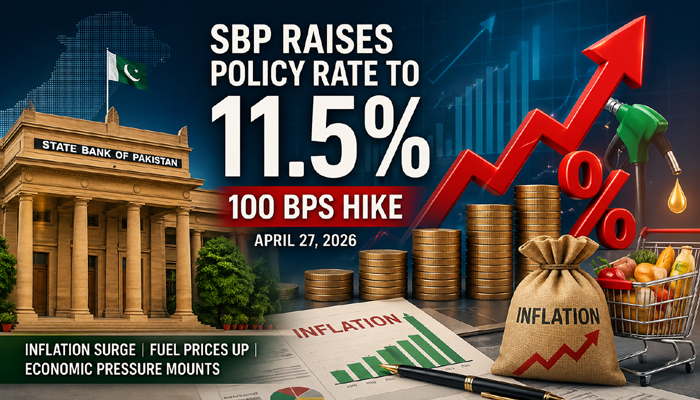
The Pakistan interest rate hike 2026 has taken center stage as the State Bank delivers a bold move to counter rising inflation. In a decisive meeting held on April 27, 2026, the Monetary Policy Committee raised the policy rate by 100 basis points to 11.5%, marking a sharp pivot from its previous wait-and-watch approach.
Read More: SBP Expected to Cut Interest Rates by 50bps on March 10 – Day News TV
This sudden tightening has sparked widespread debate among businesses, investors, and households, as the country braces for a new wave of economic pressure driven by inflation and global uncertainty.
Pakistan Interest Rate Hike 2026: Why SBP Took a Bold Step
The Pakistan interest rate hike 2026 comes as inflationary pressures intensify rapidly. A surge in petrol prices and worsening global energy costs have significantly altered the inflation outlook.
Just weeks earlier, the central bank had kept rates steady at 10.5%, hoping for stability. However, escalating fuel prices and supply chain disruptions forced policymakers to act aggressively.
This move signals a clear priority: controlling inflation at all costs, even if it slows economic growth.
Inflation Threat Looms Large After Pakistan Interest Rate Hike 2026
Pakistan’s inflation trajectory is becoming increasingly alarming. Headline inflation rose to 7.3% in March 2026, while core inflation reached 7.8%.
What makes the Pakistan interest rate hike 2026 particularly significant is the growing risk of inflation crossing into double digits in the coming months. Rising transport costs and energy prices are already feeding into broader price levels, creating a ripple effect across the economy.
Even though food supplies remain stable, offering some relief, they are unlikely to offset the strong upward pressure from energy costs.
Middle East Conflict Fuels Pakistan Interest Rate Hike 2026
A major driver behind the Pakistan interest rate hike 2026 is the ongoing Middle East conflict, which has disrupted global supply chains.
Higher freight charges, elevated insurance premiums, and soaring oil prices have all contributed to Pakistan’s worsening macroeconomic outlook. These global shocks have made it increasingly difficult for policymakers to maintain price stability.
The central bank has warned that the longer the conflict continues, the greater the risks to inflation and economic growth.
Growth Slows as Pakistan Interest Rate Hike 2026 Takes Effect
While Pakistan’s economy showed strong momentum earlier in the fiscal year, signs of slowdown are now emerging.
GDP growth reached 3.9% in the second quarter of FY26, but recent data suggests moderation ahead. Industrial output and services activity are expected to weaken, while agriculture faces setbacks due to lower wheat production.
The Pakistan interest rate hike 2026 is likely to further dampen economic activity, as higher borrowing costs discourage investment and consumer spending.
External Stability Offers Relief Despite Pakistan Interest Rate Hike 2026
Despite mounting challenges, Pakistan’s external sector has shown resilience. The country recorded current account surpluses in February and March, supported by strong remittances.
Foreign exchange reserves stood at approximately 15.8 billion dollars as of April 2026, with projections to exceed 18 billion dollars by June.
Additionally, renewed access to international capital markets through a Eurobond issuance has boosted investor confidence, helping cushion the economy against external shocks.
Fiscal Pressure Builds After Pakistan Interest Rate Hike 2026
The Pakistan interest rate hike 2026 also highlights growing fiscal challenges. Tax collection has fallen short of targets, with a significant shortfall recorded during the fiscal year.
At the same time, rising oil prices have forced the government to provide subsidies to protect vulnerable groups, increasing fiscal strain.
To maintain stability, authorities may need to cut expenditures and accelerate structural reforms, including widening the tax base and reducing losses from state-owned enterprises.
Credit Trends and Market Impact of Pakistan Interest Rate Hike 2026
Private sector credit continues to grow at a steady pace, driven by earlier rate cuts and improving business sentiment. However, the latest rate hike is expected to slow borrowing in the coming months.
Sectors such as textiles, trade, and chemicals have seen strong credit uptake, while consumer financing has shown signs of recovery. Still, tighter monetary conditions could reverse these gains.
What Lies Ahead After Pakistan Interest Rate Hike 2026
The Pakistan interest rate hike 2026 marks a turning point in the country’s economic policy. With inflation expected to remain above target for an extended period, further tightening cannot be ruled out.
The central bank has made it clear that maintaining a positive real interest rate is critical to stabilizing the economy. However, this approach comes with trade-offs, particularly slower growth and increased financial pressure on businesses and consumers.
The road ahead will depend heavily on global developments, especially energy prices and geopolitical stability. For now, Pakistan finds itself navigating a delicate balance between controlling inflation and sustaining economic growth.
Detailed Monetary Policy Report