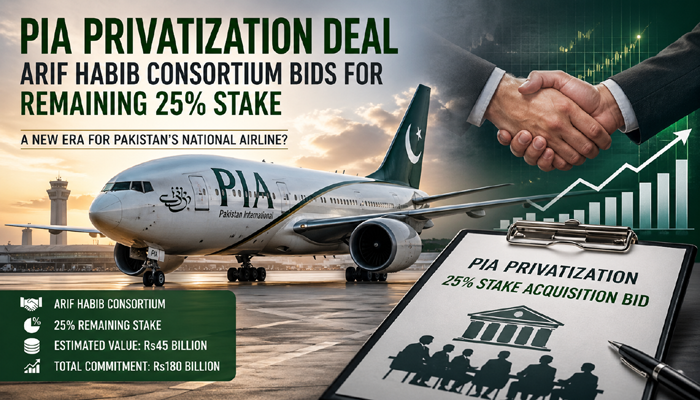
The PIA Privatization Deal has entered a dramatic new phase as a consortium led by Arif Habib makes a bold move to acquire the government’s remaining 25 percent stake in Pakistan International Airlines. With the April 28 deadline now closed, this latest bid signals a decisive push toward full private ownership of the struggling national carrier.
A High-Stakes Expansion in the PIA Privatization Deal
The consortium had already shaken the market by securing a 75 percent controlling stake in the airline for Rs135 billion. That transaction valued the entire airline at approximately Rs180 billion, placing the remaining 25 percent stake at an estimated Rs45 billion.
If approved, the total investment under the PIA Privatization Deal would rise to a staggering Rs180 billion, marking one of the most significant privatization transactions in Pakistan’s recent economic history.
This aggressive move highlights the group’s determination to consolidate ownership and unlock the airline’s long-term value, particularly its lucrative international landing rights and strategic global routes.
Why the PIA Privatization Deal Matters
Pakistan International Airlines has long been a financial burden on the state, draining public resources while struggling with operational inefficiencies. However, despite its losses, the airline holds immense strategic importance.
The PIA Privatization Deal is not just about selling shares. It represents a turning point for Pakistan’s broader privatization agenda. Investors and policymakers alike are watching closely, as the outcome could shape confidence in future government divestments.
The deal structure itself is designed to revive the airline. It combines direct payments to the government with fresh capital injection through a rights issue, aimed at restructuring operations and restoring profitability.
Read More: PIA Privatisation Nears Completion as Government Pushes for Final Deal
Rising Fuel Costs Threaten the PIA Privatization Deal
While the acquisition signals optimism, the road ahead is far from smooth. Arif Habib has already warned that soaring jet fuel prices could make airline operations unsustainable.
Fuel typically accounts for 30 to 40 percent of airline operating costs. In Pakistan, the burden is even heavier due to pricing distortions and taxation policies. As fuel prices surge globally, the PIA Privatization Deal faces a critical test.
Passing these costs on to passengers is not easy in a price-sensitive market. Higher ticket prices could reduce demand, making recovery efforts even more challenging.
Policy Pressure Builds Around the PIA Privatization Deal
The consortium’s concerns have sparked debate among analysts. Some believe these public statements are aimed at pushing for policy relief, particularly in aviation fuel pricing.
However, the government’s options remain limited. Under an IMF-supported economic framework, fiscal space is tight. Pakistan has already absorbed around Rs69 billion in fuel-related support, leaving little room for additional concessions.
This tension adds another layer of complexity to the PIA Privatization Deal, as policymakers must balance reform commitments with industry sustainability.
Structural Challenges Still Loom
Beyond fuel costs, the airline continues to face deep-rooted structural issues. High taxation, energy constraints, and legacy inefficiencies remain major obstacles.
The consortium has outlined plans for fleet rationalization and cost optimization. These measures are essential, but the scale of reform required is significant.
Turning around an airline of this size will demand not just financial investment, but also operational discipline and strategic clarity.
A Defining Moment for Pakistan’s Economy
The outcome of the 25 percent stake bid could mark the final step toward full privatization of Pakistan International Airlines. If successful, the PIA Privatization Deal will stand as a landmark case in the country’s economic reform journey.
More importantly, it will send a strong signal to global investors about Pakistan’s willingness to restructure and modernize its state-owned enterprises.
For now, the deal awaits regulatory approvals and government acceptance. But one thing is clear: the stakes have never been higher.
Related Story: PIA Privatization Deal