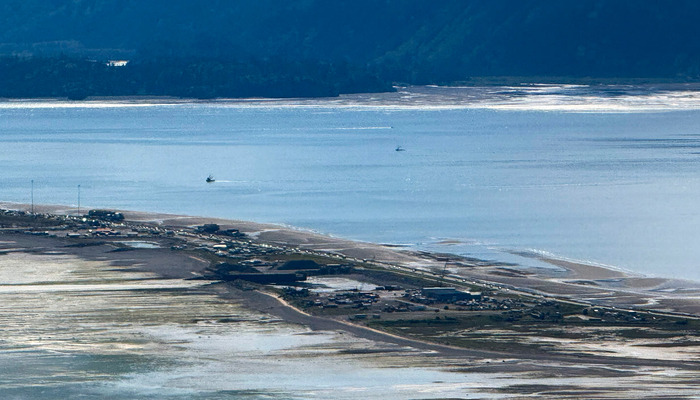
A powerful 7.3-magnitude earthquake struck off the coast of Alaska on Wednesday, briefly triggering tsunami warnings for large parts of the state’s southern coastline. The earthquake hit near Sand Point, causing authorities to issue evacuation alerts and warnings. Fortunately, the tsunami that followed proved to be minor, leading officials to cancel all warnings later in the day.
According to the U.S. Geological Survey (USGS), the earthquake occurred at 12:37 p.m. local time. It struck about 54 miles south of Sand Point and 12 miles deep beneath the ocean floor. The region lies along one of the most seismically active fault lines in the world, making such events common, though not always this intense.
The National Oceanic and Atmospheric Administration (NOAA)’s Tsunami Warning Center quickly issued tsunami warnings for coastal regions stretching from Kennedy Entrance to Unimak Pass. This included major areas like Kodiak Island, Chignik, and Cold Bay. The U.S. Coast Guard responded promptly, moving personnel to higher ground and activating air crews for support.
Tsunami Threat Downgraded and Then Canceled
Initially, officials warned that tsunami waves could reach up to one foot high. But within an hour of the quake, the warnings were downgraded to advisories. Eventually, all warnings were canceled after sea-level readings confirmed only a minor tsunami. A monitoring buoy near Sand Point recorded a small wave of about 0.2 feet (3 inches).
“The tsunami was generated by this event, but it no longer poses a threat,” stated NOAA’s Tsunami Warning Center. Although no longer dangerous, small variations in sea levels might still occur, officials said.
Read More: Heavy Rains in Punjab Leave Nine Dead, Dozens Injured
No Damage Reported Despite Sizeable Quake
Seismologists and local officials confirmed that there were no immediate reports of injuries or property damage from the quake or resulting waves. Dr. Michael West, a leading seismologist with the Alaska Earthquake Center, emphasized the region’s vulnerability.
“The entire southern coast of Alaska is a gigantic earthquake zone,” West said. “Four out of five earthquakes in the United States happen in Alaska.” He added that while large quakes are frequent in the area, most go unfelt or cause no real harm. “Early signs suggest we’re on the lucky side today,” he noted.
Understanding the Tsunami Risk
Tsunamis often follow undersea earthquakes, especially when tectonic plates shift suddenly. These powerful waves can rise quickly and hit coastal areas within minutes, making early warnings crucial. Meteorologists and geologists continue to monitor the event and gather more data on the quake’s impact.
This incident once again highlights the importance of rapid response systems and public awareness in areas prone to natural disasters. While this particular tsunami warning was canceled after the massive earthquake off Alaska, the readiness of authorities and early detection systems ensured public safety and minimized panic.
Follow us on Instagram, YouTube, Facebook,, X and TikTok for latest updates