
South Korea Sets Sights on Building Lunar Base by 2045

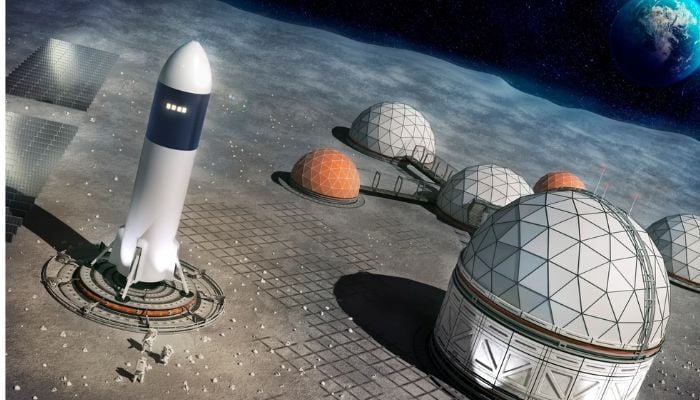
South Korea has unveiled bold plans to establish a lunar base on the Moon by 2045, entering the global space race alongside other Asian powers like China, Japan, and India. With its newly formed Korea Aerospace Administration (KASA) leading the charge, the country aims to build a permanent base that will boost scientific discovery, technology, and economic potential while laying the groundwork for future deep-space missions.
Ambitious Space Agenda Unveiled
At a recent public meeting held on July 17 at the National Research Foundation of Korea, KASA outlined its space ambitions through a long-term development strategy. Officials emphasized that the lunar base will serve as more than just a scientific outpost. It is expected to play a pivotal role in space commerce and technological innovation, making South Korea a major player in extraterrestrial exploration.
KASA introduced five primary missions for its future roadmap:
Low-Earth orbit missions
Microgravity experiments
Lunar surface exploration
Solar observation
Advanced space science missions
These objectives reflect South Korea’s intention to build both scientific credibility and operational capability in space.
Read: BMW Radiator Used to Push Threadripper Pro to New Heights
Robotic Lander to Pave the Way
One of the first concrete steps toward the lunar base involves deploying a robotic lander. This specialized spacecraft is designed to execute soft landings and carry out precise tasks on the Moon’s surface. KASA plans to introduce an upgraded version of this lander by 2040, expanding its capacity for long-term lunar activity.
Officials clarified that the lander would serve as a foundation for constructing the broader infrastructure of the lunar economic base, which they aim to complete by 2045.
South Korea’s Space Journey So Far
South Korea’s entry into lunar exploration isn’t entirely new. The country launched its first lunar orbiter, Danuri, in August 2022. This marked the successful completion of the first phase of its Korean Lunar Exploration Program and demonstrated the nation’s growing expertise in space science.
In the second phase of the program, South Korea intends to launch robotic modules by 2032. Unlike previous missions that depended on SpaceX rockets, this phase will rely on the indigenous KSLV-III rocket. This move reflects the country’s ambition to reduce reliance on foreign launch providers and become self-sufficient in space technology.
Rising Competition in Asia’s Space Arena
South Korea’s lunar goals come at a time when other Asian nations are rapidly advancing their own space programs. China, for instance, has already announced plans to construct a multinational lunar base by 2045. India continues its progress with lunar and Martian missions, while Japan remains active in robotic space exploration and asteroid studies.
KASA’s strategy appears to be both a response to and a part of this regional momentum. The decision to focus on a permanent lunar facility also signals South Korea’s desire to align with global efforts toward space colonization and commercialization.
Building Toward Economic and Scientific Returns
Beyond national prestige, KASA views its lunar base as a potential economic engine. Officials say the Moon offers untapped resources that could benefit industries back on Earth. The base will also create opportunities for international collaboration, private sector involvement, and educational advancement in aerospace sciences.
KASA envisions that, by 2045, its lunar outpost will host long-duration missions, robotic operations, and perhaps even human activity in partnership with global allies.
Steps Ahead and Challenges to Tackle
While the vision is ambitious, several hurdles remain. Developing a next-generation lander, constructing Moon-ready infrastructure, and sustaining systems in extreme lunar environments will require significant investment and research. Still, KASA appears confident in its path forward.
The agency plans to gradually build its capabilities through smaller missions, robotic trials, and partnerships with other spacefaring nations. Technological independence, particularly through the KSLV-III rocket, will also be crucial for meeting long-term objectives.
With its strategy now public, South Korea has officially declared its intention to become a major force in the new space era—one where the Moon is no longer just a destination, but a launchpad for the future.