
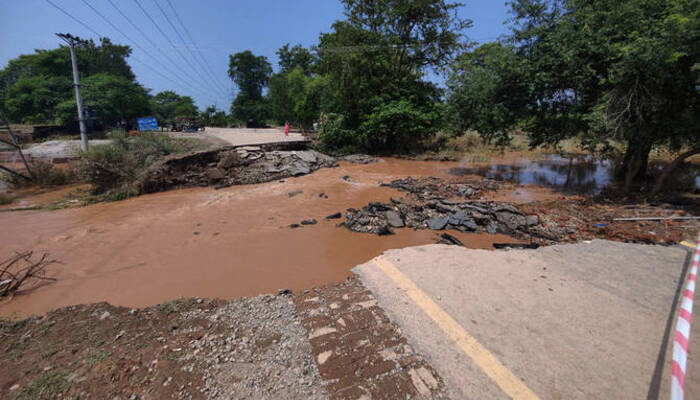
Pakistan’s flood crisis has entered a critical phase as authorities carried out a controlled breach of a riverbank in Punjab to protect Jhang city from massive surges. The move, part of long-used flood management measures, came after heavy rains and upstream water releases triggered widespread devastation, leaving at least 20 people dead this week and forcing over 429,000 to evacuate.
Rising Threat in Punjab
The Provincial Disaster Management Authority (PDMA) confirmed that the deliberate breach near Riwaz Bridge on Friday redirected floodwaters away from Jhang. However, the decision submerged farmland and smaller settlements. Officials said the priority was to save large population centers and infrastructure.
Punjab, home to over half of Pakistan’s 240 million citizens, has suffered the heaviest monsoon damage so far. Torrential rains combined with water released from Indian dams have pushed rivers beyond safe limits, inundating 1,769 villages and affecting 1.45 million people.
Deadly Toll of Monsoon
Disaster officials reported 20 deaths in Punjab in recent days, while the nationwide monsoon death toll since June has climbed past 820. Families of victims are being compensated with Rs1 million each.
The scale of flooding is among the worst since 2010 and 2022, when Pakistan faced catastrophic “super floods.” This year, three major rivers — Ravi, Sutlej, and Chenab — are simultaneously in high flood for the first time in nearly four decades.
Read: Punjab Police on High Alert Amid Rain and Flood Threat
Controlled Breach to Protect Jhang
PDMA Director General Irfan Ali Kathia explained that nearly 217,000 cusecs of water are flowing downstream on the Ravi. At Balloki Barrage, the river already carries about 147,000 cusecs, with Nala Deg expected to add another 10,000–20,000 cusecs.
At Chiniot Bridge, water flow reached 830,000 cusecs, threatening Jhang and Chiniot districts, which together house about 4.6 million people. To prevent urban disaster, engineers executed the breach near Riwaz Bridge, diverting surging waters into rural areas.
Kathia stressed that this was a necessary choice to protect major towns: “All destruction was avoided due to timely response and cooperation of the public.”
Relief Efforts Underway
Authorities have established 365 relief camps in schools and public buildings. So far, around 4,500 displaced residents have moved in, but officials expect numbers to rise as floods continue downstream.
Over 301,000 animals have been evacuated. Special arrangements include continuous fodder supplies, tent villages, and mobile medical units called “Clinics on Wheels.” Medical camps are distributing essential medicines, including anti-snakebite vaccines, while livestock officials provide feed and vaccination for cattle.
Punjab Chief Secretary Zahid Akhtar Zaman confirmed that schools in flood-hit districts may remain closed for a week. Emergency food stocks and wheat reserves are also being distributed to prevent shortages.
Rising Waters in Sutlej
Flood levels on the Sutlej River remain critically high. At Ganda Singh Wala, discharge has stood at 261,000 cusecs for four consecutive days. This flow has raised river levels in Okara, Pakpattan, and Bahawalnagar districts to between 100,000 and 150,000 cusecs.
Officials warned that these waters are expected to enter Sindh’s river system soon. Provincial authorities in Sindh have already been placed on high alert, recalling the devastation of 2022 when the province bore the brunt of record floods.
National and Provincial Coordination
Prime Minister Shehbaz Sharif emphasized the need for a joint national strategy on climate resilience. He said a working paper on climate change and monsoon preparedness would soon be shared with all provincial governments.
“Climate change is a reality, and only through preparedness can we reduce the damages of natural disasters,” Sharif stated. He pledged to develop new water reservoirs through consensus among provinces and called for a high-level meeting with chief ministers and leaders of Azad Kashmir and Gilgit-Baltistan once the emergency stabilizes.
Memories of 2022 Disaster
The crisis has revived painful memories of Pakistan’s 2022 floods, the deadliest in its history. At that time, one-third of the country was submerged, more than 1,700 people died, and 33 million were displaced. Sindh alone lost nearly 2 million homes and over 4 million acres of farmland.
Officials fear that if current trends continue, 2025 could mark another turning point in Pakistan’s climate crisis. Controlled breaches may save cities, but the human and economic costs remain staggering.
Looking Ahead
Rescue teams continue search and relief missions across Punjab. Authorities urge residents near rivers and low-lying areas to remain vigilant, heed evacuation calls, and move livestock and valuables to safer locations.
With surging flows set to reach Sindh in the coming days, the pressure on Pakistan’s disaster management system is far from over. The unfolding crisis highlights the urgent need for climate adaptation, stronger infrastructure, and long-term flood resilience to protect millions at risk every monsoon season.
Follow us on Instagram, YouTube, Facebook,, X and TikTok for latest updates
