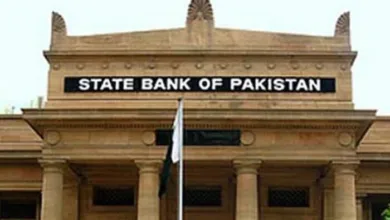
ISLAMABAD — Pakistan has extended its airspace ban on Indian aircraft for another month, the Pakistan Airports Authority (PAA) confirmed on Friday. The fresh NOTAM (Notice to Airmen) bars Indian commercial airlines, India-registered aircraft, and Indian military flights from entering Pakistani airspace.
This extension marks the latest escalation in a series of tit-for-tat restrictions between the two nuclear-armed neighbours. Pakistan first closed its skies to Indian aircraft in April, after New Delhi suspended the Indus Water Treaty and intensified operations in Indian Illegally Occupied Jammu and Kashmir (IIOJK).
Focus Keyphrase: Pakistan Extends Airspace Ban on Indian Aircraft
The Pakistan extends airspace ban on Indian aircraft decision pushes the total duration of restrictions to 210 days. Officials said the move reflects both security concerns and a response to India’s continued aerial restrictions on Pakistani airlines.
The PAA emphasised that no Indian-registered, Indian-operated, or military aircraft will be allowed to transit Pakistani airspace during the extension period.
Read more: Pak-Saudi Defense Pact Seen as Boost for Regional Peace
Retaliation Follows Indus Water Treaty Suspension
Islamabad imposed its initial airspace ban in response to India’s suspension of the Indus Water Treaty — a landmark agreement that governs the sharing of rivers between the two countries. The suspension, announced by New Delhi in April, came after the deadly Pahalgam attack in IIOJK, which killed dozens of security personnel.
Pakistan called India’s treaty suspension “a hostile and destabilising act” and vowed reciprocal measures. Within days, the PAA issued a NOTAM halting all Indian flights. India, in turn, barred Pakistani airlines from using its airspace on April 30.
Operation Bunyan-um-Marsoos Escalates Crisis
Tensions spiked further on May 6 and 7 when India launched what Islamabad described as “unprovoked attacks” on multiple Pakistani cities. Pakistan’s armed forces responded with a large-scale retaliatory military operation named “Bunyan-um-Marsoos”, targeting several Indian military installations across multiple regions.
Officials in Islamabad said the strikes were “precise and proportionate” and carried out in response to India’s “continued aggression” across the Line of Control and inside Pakistani territory. New Delhi claimed its actions targeted “terrorist infrastructure,” but Pakistani authorities dismissed the assertion and presented images of damaged Indian military assets.
According to Pakistan’s military, its forces downed six Indian fighter jets, including three Rafale aircraft, and dozens of drones. The confrontation lasted 87 hours before both sides agreed to a ceasefire on May 10 brokered by the United States.
Impact on Aviation Industries
India’s aviation industry has borne the brunt of the disruption caused by the Pakistan extends airspace ban on Indian aircraft measure. Airlines have been forced to reroute flights over longer paths, increasing fuel costs and delays on international routes to the Middle East, Europe, and North America.
Pakistani aviation has experienced far less disruption. Officials said the national carrier and private airlines have adjusted routes with minimal impact on schedules and revenue.
Aviation analysts note that airspace closures between Pakistan and India tend to harm Indian carriers more because of India’s larger outbound flight network and heavier dependence on western routes that overfly Pakistan.
Historical Context of Airspace Closures
This is not the first time Islamabad has shut its skies to Indian flights. Similar restrictions were imposed during the 1999 Kargil conflict and again in 2019 after the Pulwama attack. In both cases, Indian carriers faced heavy operational and financial losses, while Pakistani aviation remained comparatively insulated.
Experts say these repeated closures underscore how aviation remains a frontline tool in South Asia’s geopolitical disputes. “Every time tensions escalate, airspace becomes one of the first pressure points,” said a former senior PIA executive. “It affects airlines instantly and shows the public that the situation is serious.”
Regional and International Responses
The United States and other international actors have urged both sides to maintain the ceasefire agreed on May 10 and to resume dialogue on outstanding issues, including water-sharing and cross-border security.
Analysts believe the airspace ban will remain in force until there is a tangible easing of tensions. “The skies will not open until the ground situation stabilises,” said a South Asia security analyst in Islamabad. “Given the depth of the crisis after Operation Bunyan-um-Marsoos, that could take months.”
For now, the new NOTAM underscores Pakistan’s resolve to maintain the ban until further notice. Aviation authorities have instructed airlines to plan accordingly and warned of legal action against any violation.
With both countries facing political pressure at home and international scrutiny abroad, the Pakistan extends airspace ban on Indian aircraft decision signals that South Asia’s aerial standoff is far from over. The coming weeks will reveal whether quiet diplomacy can succeed where confrontation has failed.
Follow us on Instagram, YouTube, Facebook,, X and TikTok for latest updates