
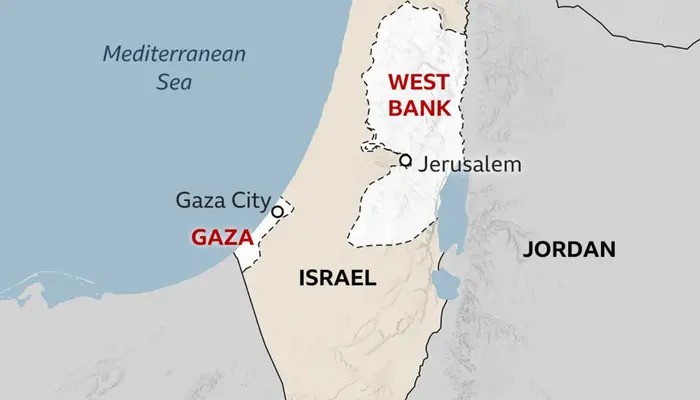
The United Kingdom has recognised Palestinian statehood in a major diplomatic shift, igniting sharp reactions across the Middle East. The keyword Palestinian statehood has now become central to international discussions as London urges restraint from Israel and pushes for a renewed two-state solution. Foreign Secretary Yvette Cooper warned Israel against any retaliation or annexation of West Bank territory, insisting that the move seeks peace, justice, and security for both Israelis and Palestinians.
Britain’s Landmark Decision
Prime Minister Sir Keir Starmer announced the recognition on Sunday, aligning the UK with Canada, Australia, and Portugal. This marks one of the most significant changes in British Middle East policy in decades. Cooper said the decision aims to revive the fading prospect of a two-state solution and protect long-term regional stability.
Speaking ahead of a UN conference in New York, she confirmed that she warned her Israeli counterpart directly. “This is about securing peace and justice,” she said. “We will continue to work with partners across the region to protect both Israeli and Palestinian security.”
Growing International Support
Britain’s recognition comes as France prepares a similar declaration and will co-chair a UN meeting on a peace framework alongside Saudi Arabia. Belgium is also expected to follow France’s lead. These steps reflect a growing European effort to pressure Israel back to the negotiating table. Cooper plans to use the UN General Assembly to rally international consensus around a roadmap for peace and a viable Palestinian state.
Israel Rejects the Move
Israeli Prime Minister Benjamin Netanyahu condemned the decision, calling it “a huge reward to terrorism.” He vowed that Palestinian statehood “will not happen” and accused the UK of undermining Israel’s security. Israeli government spokesperson David Mencer said the Labour government had betrayed the Jewish community, describing the recognition as an “abandonment” during a time of heightened threat.
Netanyahu also repeated his intention to expand Jewish settlements in the West Bank, stating his government had already “doubled” settlement activity and would continue on that path. Far-right Israeli minister Itamar Ben Gvir went further, urging the annexation of the West Bank and the dismantling of the Palestinian Authority.
Read: West Bank Annexation and Palestinian Recognition
UK Defends Its Stance
Starmer rejected accusations that the recognition benefits Hamas, the militant group ruling Gaza. He stressed that Hamas has “no future, no role in government, no role in security.” Britain has already sanctioned Hamas and is preparing new measures against its leaders. Cooper echoed these assurances, pledging to work with allies to ensure violent groups have no place in a future Palestinian administration.
Middle East Minister Hamish Falconer said the timing was critical. “The threat to a two-state solution has grown worse and worse,” he said. “We must act before it disappears completely.”
Palestinian Leaders Welcome the Decision
Palestinian Authority President Mahmoud Abbas praised the UK’s announcement as a crucial step toward achieving “security, peace, and good neighbourliness” with Israel. Hamas also welcomed the recognition as an important affirmation of Palestinian rights but called for immediate action to end the ongoing conflict.
Rising Tensions and Humanitarian Crisis
The decision comes amid a worsening humanitarian crisis in Gaza and the West Bank. A UN commission recently accused Israel of committing genocide in Gaza, reporting around 65,000 deaths in nearly two years of conflict. UN-backed health experts have declared a famine in Gaza City. Israel rejected the genocide report as false and blamed Hamas and aid agencies for the suffering.
Despite these disputes, Britain maintains that recognising Palestinian statehood is essential to preserving hopes for peace. UK officials highlighted the ongoing expansion of Israeli settlements in occupied territories as a key reason for acting now. Cooper warned that extremists on both sides are trying to destroy any chance of a two-state solution.
A Fragile Path Forward
Palestine is recognised by about 75% of UN member states but lacks agreed borders, a capital, or an army, making recognition largely symbolic. Still, the UK’s decision sends a powerful message at a critical moment. By joining a growing coalition of countries supporting Palestinian statehood, Britain hopes to keep the idea of two nations living side by side alive, even as violence and political resistance threaten to close the door on peace.
Follow us on Instagram, YouTube, Facebook,, X and TikTok for latest updates
